Georgia
I feel like Georgia is one of those countries that everyone knows exists but few truly know much about or where it is on a map. It made international headlines when Russia invaded the northern regions of Abkhazia and South Ossetia in 2008, subsequently stationing troops there and recognizing them as independent countries.
Georgia’s relationship with Russia has always been rather one-sided. In the late 18th century, Georgian kingdoms faced constant threats from the Persian and Ottoman Empires. In 1801, the Kingdom of Kartli-Kakheti, located in the central Caucasus, was annexed by the Russian Empire, with the rest of Georgia being absorbed over time. While there was some optimism by Georgians that their lives would improve under Russian rule, it was only the case for the elites, which is a tactic employed by every dictator or authoritarian if they want to stay in power for very long.
Taking full advantage of the 1917 Russian Revolution, Georgia declared independence the following year, establishing the Democratic Republic of Georgia. However, this independence was short-lived, as the Soviet Union soon annexed the country and incorporated it as the Georgian Soviet Socialist Republic. It would be another 70 years before Georgia declared independence in the wake of the failed Soviet experiment. Throughout the decade, civil war perpetuated political instability, and conflicts with Russian-backed separatists in the Abkhazia and South Ossetia regions in the north only exacerbated the country’s problems.
The country was thrown into chaos. In January 1992, a coup led by former Soviet foreign minister Eduard Shevardnadze and executed by a coalition of military and paramilitary forces against its first president, Zviad Gamsakhurdia, ignited a civil war that lasted until the following year. Ethnic conflicts in Abkhazia and South Ossetia intensified as growing calls for separation led to Russia recognizing the independence of both regions. Fighting largely subsided after Gamsakhurdia’s death in December 1993, solidifying Shevardnadze as the new head of state. At least 10,000 people lost their lives during the two years of conflict, with some estimates as high as 20,000.
In 1995, elections were held to establish a transitional government, which Shevardnadze won after stabilizing the country to some degree. Since corruption was, and still is, pervasive in many former Soviet and Eastern Bloc countries, it’s unsurprising that his government was also rife with it. After eight years of corruption, electoral fraud, and ineffective governance that failed to ameliorate Georgia’s poor economy, low wages, and widespread poverty, protests erupted in November 2003 following another fraudulent parliamentary election.
A rose was adopted by the protestors to signify nonviolent resistance, and the movement soon became known as the Rose Revolution. On November 22, as Shevardnadze delivered his parliamentary address, thousands of protestors gathered around the Parliament building. At the forefront of the crowd was opposition leader Mikheil Saakashvili, who, along with the protestors, entered the building holding roses, prompting Shevardnadze to flee. He resigned the next day, and elections were rescheduled for January 4, in which Saakashvili fairly won with 96% of the vote.
Saakashvili and his United National Movement (UNM) party ushered in a period of reforms aimed at reducing corruption and advancing integration into NATO and the EU. However, in August 2008, ethnic tensions in Abkhazia and South Ossetia escalated, leading Georgia to launch a military offensive into Tskhinvali, the South Ossetian capital, claiming separatists had attacked Georgian troops unprovoked.
In response, Russia deployed forces to South Ossetia and Abkhazia, advancing as far as the outskirts of Tbilisi. The war was heavily one-sided, prompting Georgia to negotiate with Russia while France brokered a ceasefire agreement. Georgia was forced to concede defeat and relinquish control over both regions, while Russia formally recognized its independence—still one of the few countries in the world to do so.
Today, the ruling political party, Georgian Dream, has held a majority of parliamentary seats since 2012. Members were elected on promises of mitigating corruption, joining the EU, and advancing towards NATO membership, but have instead shifted towards establishing closer economic and diplomatic ties with Russia. Recently, the government passed what is colloquially known as the ‘foreign agent’ bill, requiring any journalist, media organization, or NGO to register as an agent of foreign influence, significantly restricting press freedoms.
With no real opposition to challenge the Georgian Dream in the upcoming parliamentary elections on October 26th, it seems the status quo will once again prevail, despite growing public discontent. This will undoubtedly lead to massive protests after the votes are counted. While around 80% of Georgians support joining the EU, that prospect is becoming increasingly unlikely.
Even though its geographic location in the Caucasus may technically place it in Western Asia, its citizens firmly identify as European and support the collective West. After spending almost four months traveling around Turkey and Iraqi Kurdistan, I felt like I was back in Eastern Europe. My original plan was to cross over into Armenia from Turkey and make my way up to Georgia, but I later found out that the Turkish-Armenian border crossings have been closed for over thirty years.
There are two ways to cross the border by land from Turkey to Georgia. One option is hitchhiking north from the city of Kars, eventually taking you to the capital city Tbilisi, so I chose the other option: taking a bus to the crossing at the Black Sea coast and walking across to Sarpi.
Since I was coming from Mardin in southern Turkey, I spent a couple of nights in Van, then a few days in Kars before taking a bus to the town of Hopa, by the Black Sea, then a minibus to the border, where everyone had to cross by foot and then either find a bus or taxi on the other side to the burgeoning coastal city of Batumi.
Batumi

Georgia is a beautiful country with a rich wine culture that lives up to its reputation as having great food, but the cities are unfortunately filled with incessant and aggravating sounds of motorcycles and sports car drivers. The sound of people revving their engines and competing with each other to see whose is loudest in the entire Caucasus is something that you will hear throughout the day and well into the night as they leave behind a weak smell of energy drinks and insecurity.
I was excited about finally getting some quiet time after spending the last few months getting woken up at 3:30 am for the Islamic call to prayer, but I think I would rather hear that five times a day than constantly listen to revving engines. The sound is hard to escape in many places around Batumi, Kutaisi, and Tbilisi, but it is possible in some of the nicer areas.
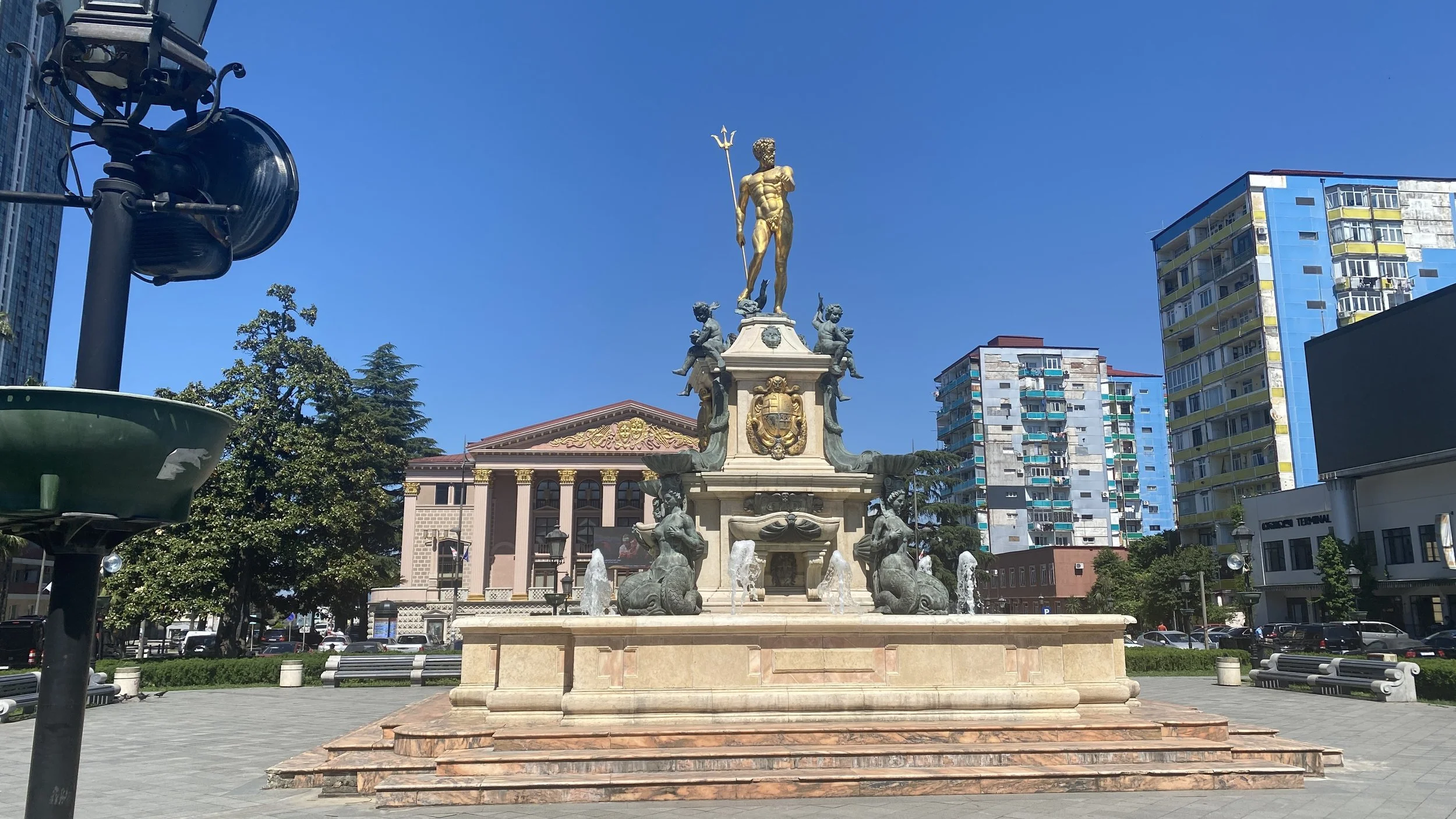
Batumi is a nice coastal city with much to offer by way of local cuisines, gift shops, and architecture, but there isn’t a lot that you won’t find in many other smaller European cities. While there are always plenty of beachgoers, the beaches consist of small, smooth stones instead of sand, which makes any kind of normal, family-friendly beach activity impossible. And as I just mentioned, the buildings are an unusual eclectic mix of historical and contemporary architecture.
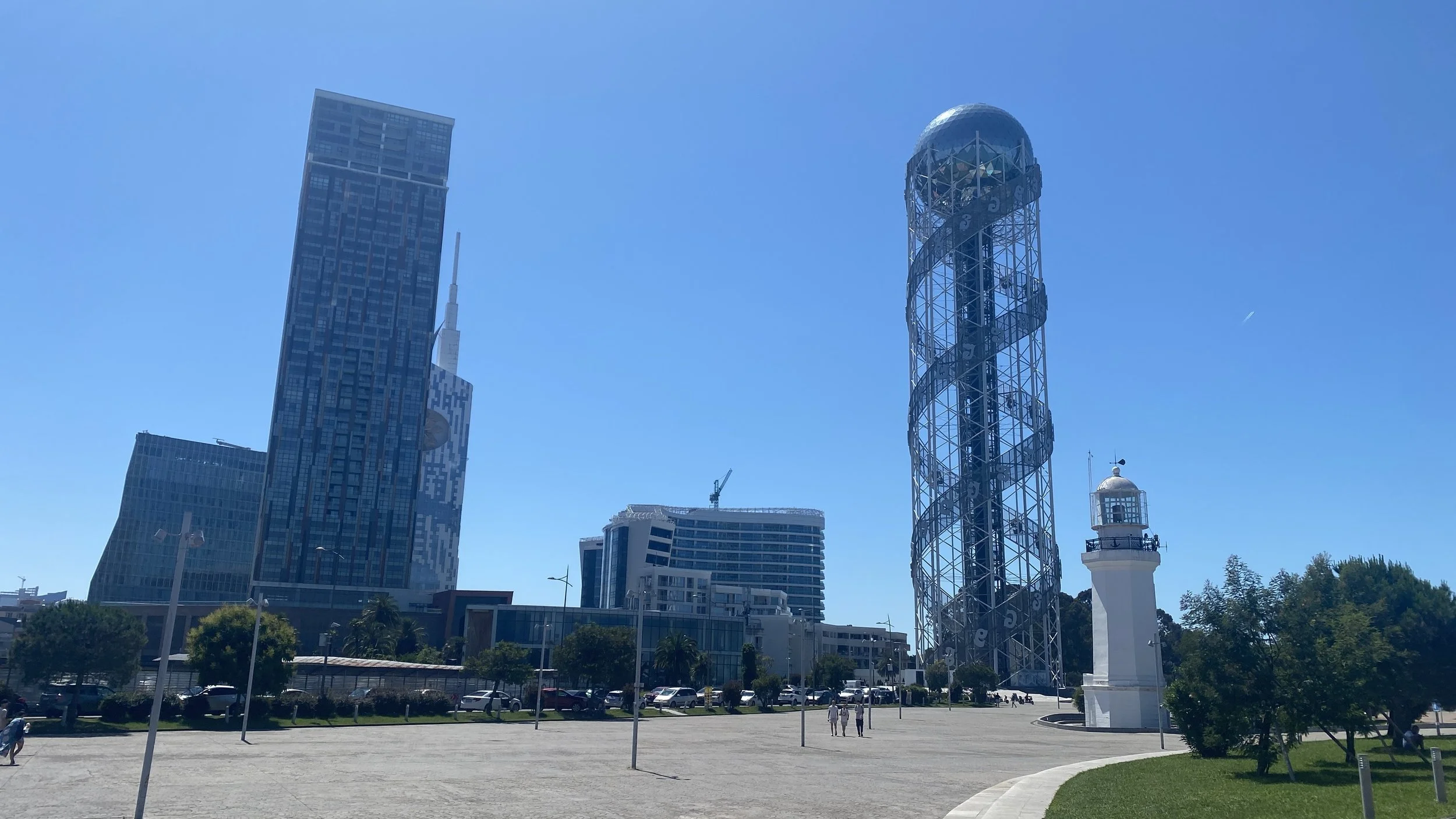
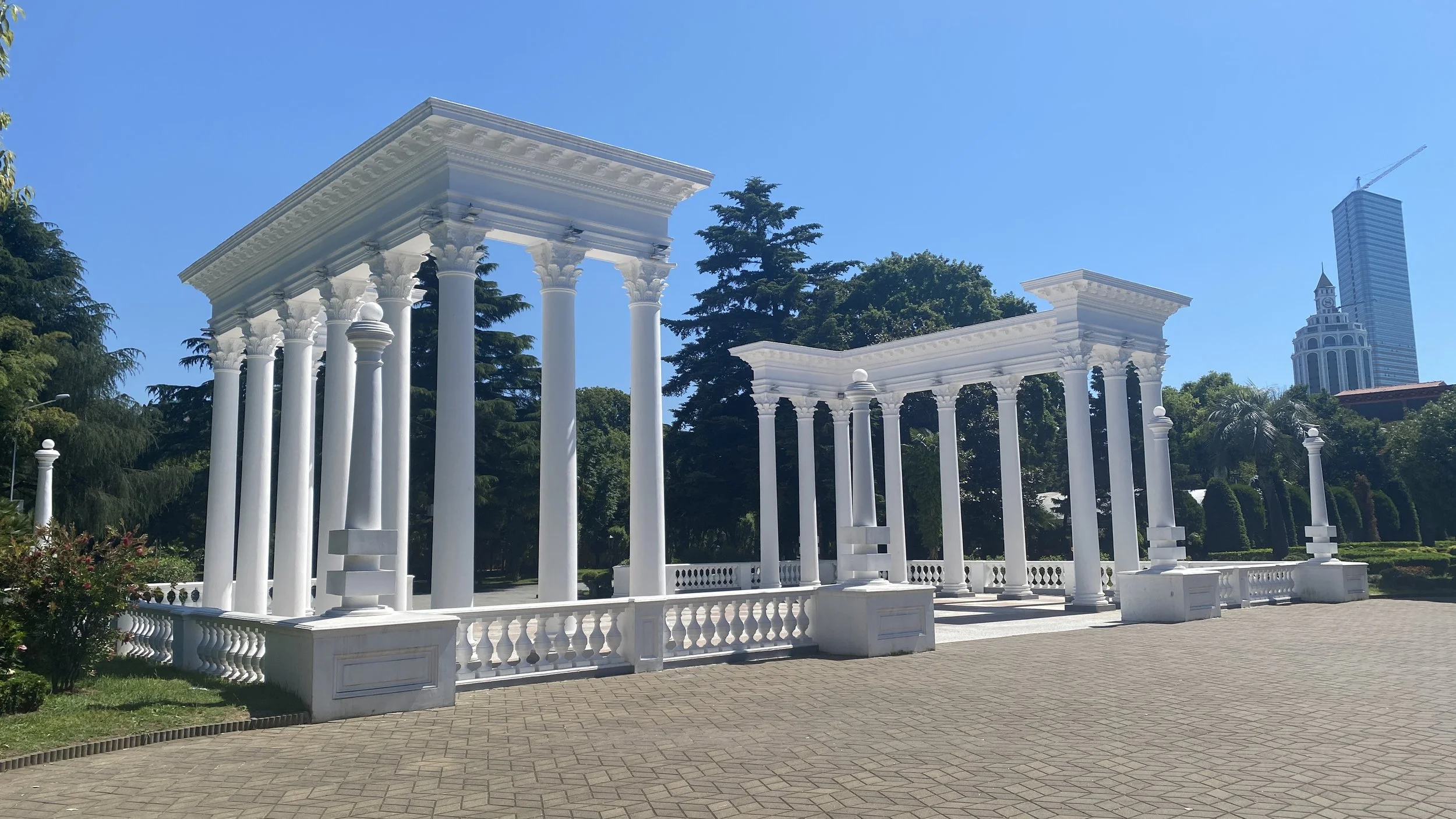
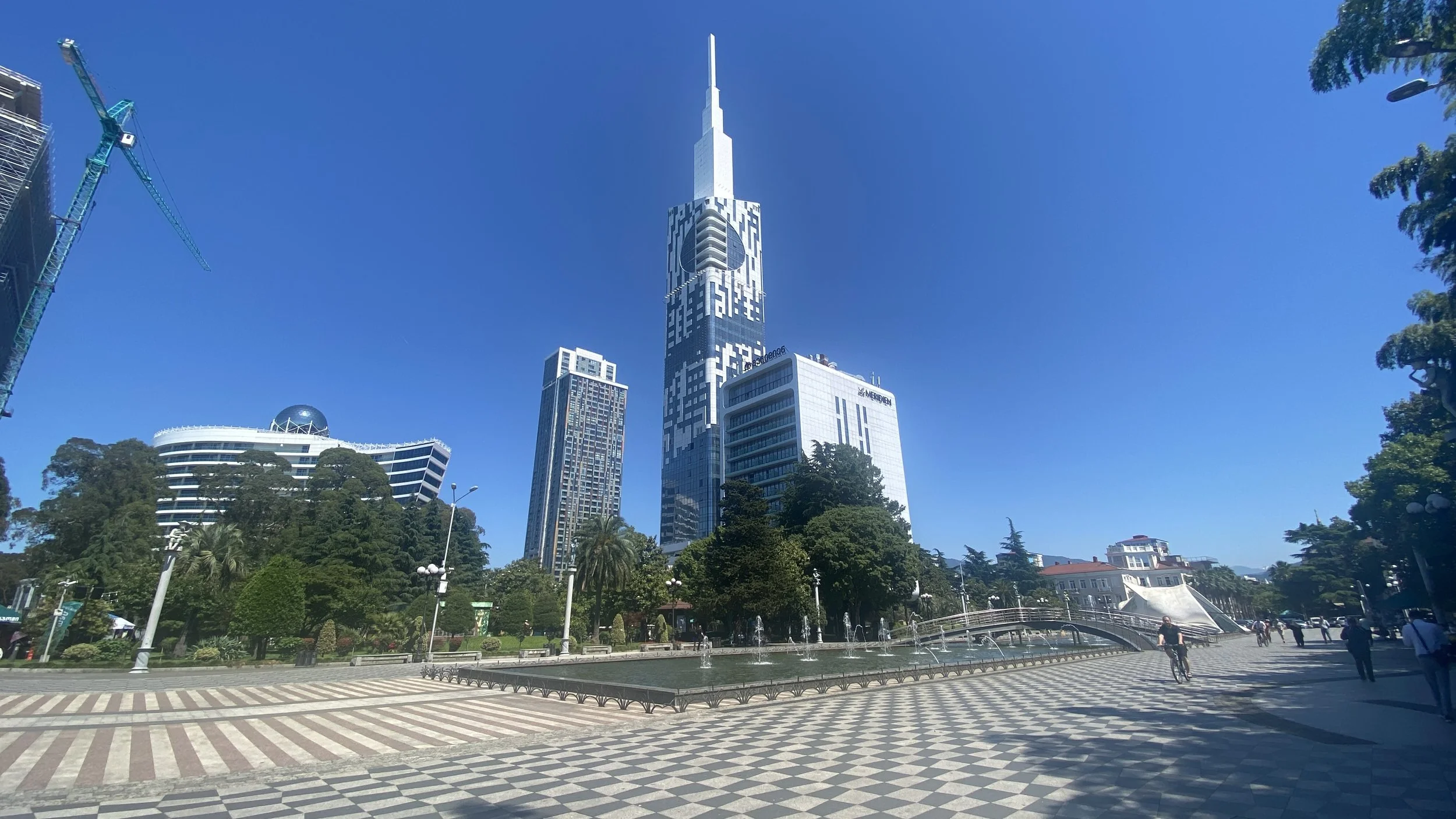
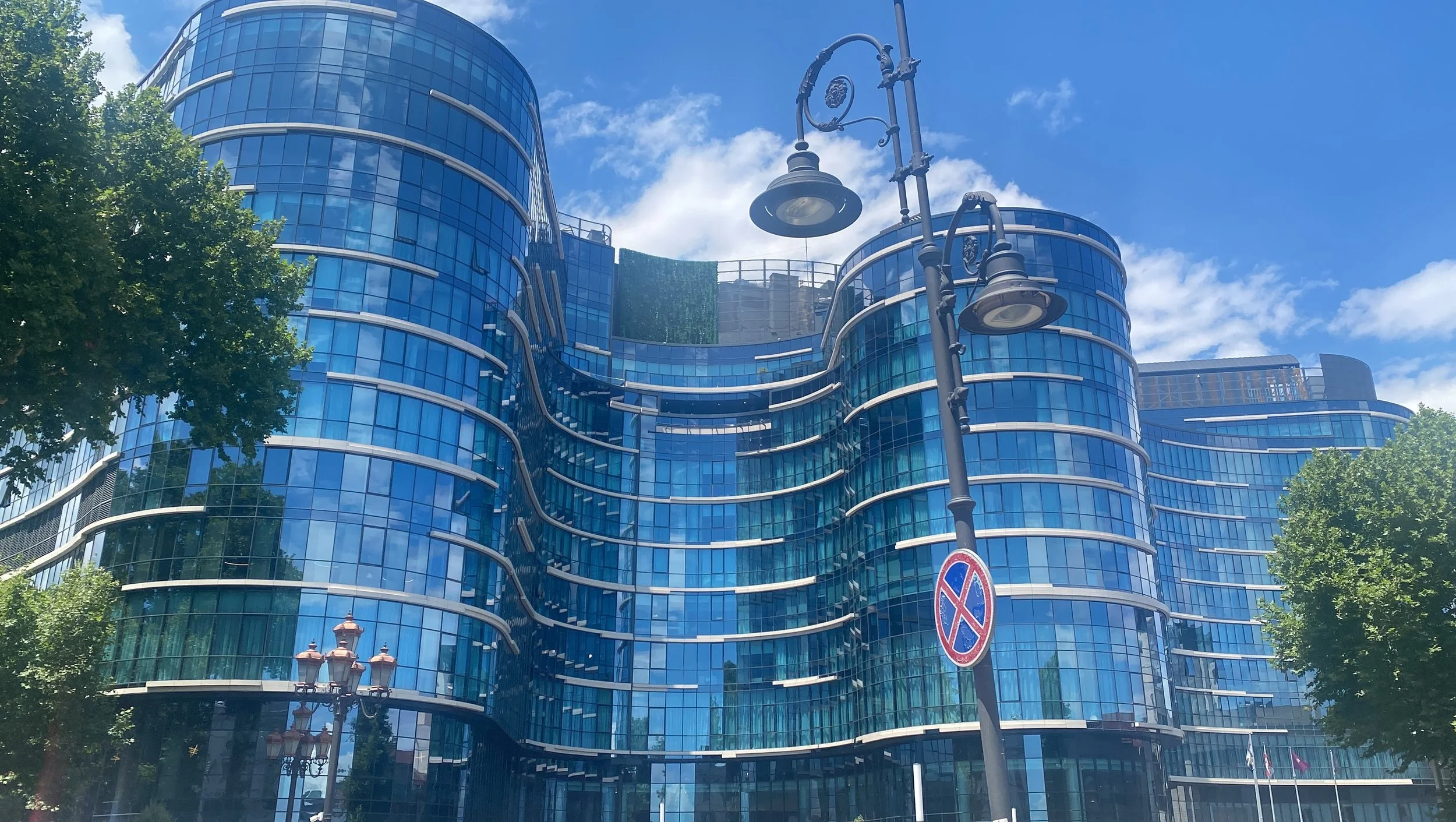
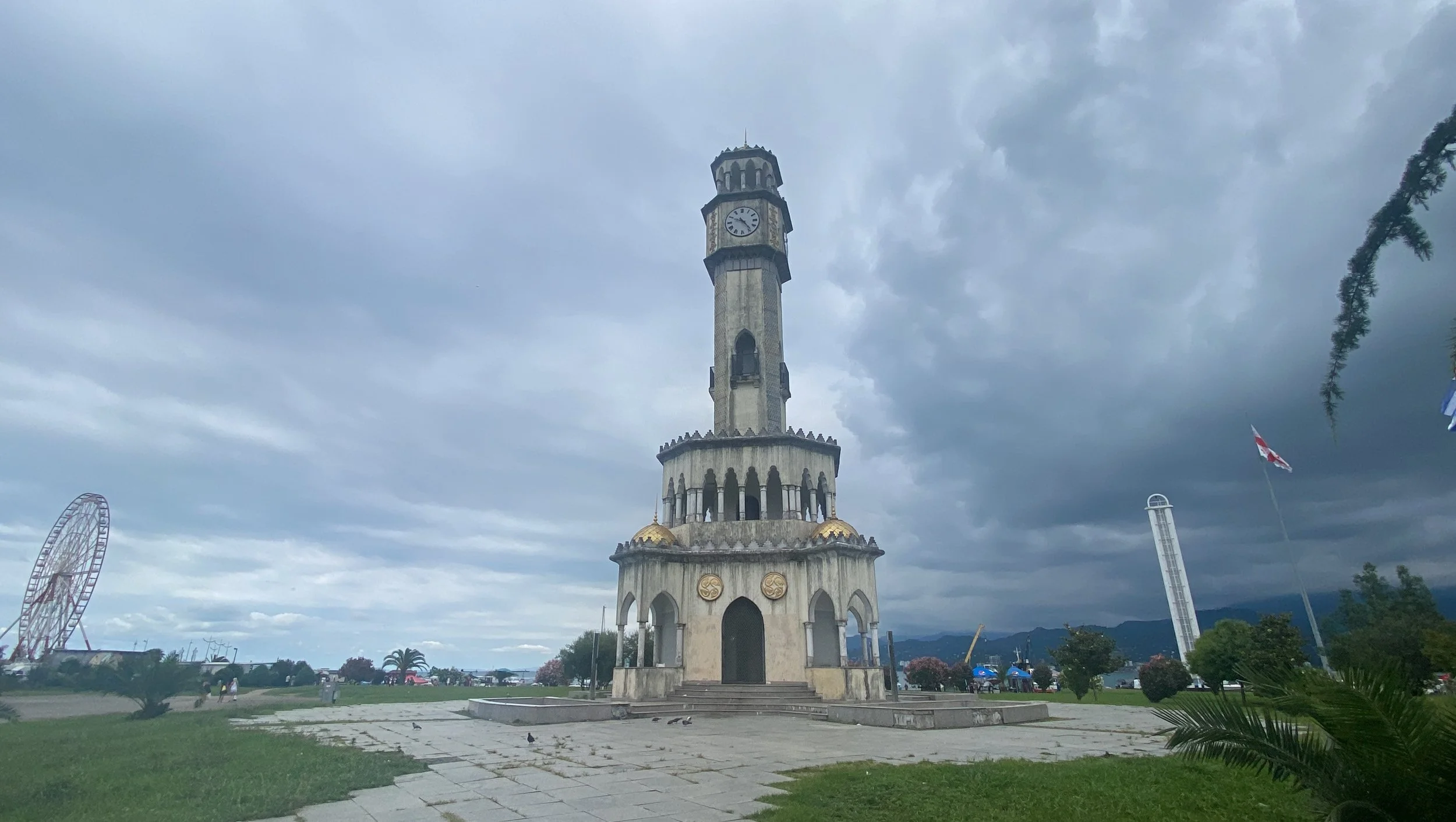
Despite that, it’s still a good place to hang out if you have the time and want to spend a few weeks trying the local cuisines and enjoying the relaxing atmosphere. In the mornings, I always enjoyed walking from the hostel to one of the several free outdoor public gyms that line the boardwalk, then spending some time swimming in the sea afterward to cool down. The hostels downtown are affordable. On the low end you can find a bed for $8 or $9, although the prices are prone to increase by $2 or $3 once July and August come around, so just be aware if you are on a budget.
The downtown and beach areas are quite nice, and there is always something going on along the boardwalk in the summer. A couple of the more popular attractions include the giant Ferris wheel and the seven-meter tall Ali & Nino Statue, two statues symbolizing a famous eponymous love novel. The statues represent Ali, an Azerbaijani Muslim, and Nino, a Georgian Christian, and are placed on tracks that move towards each other, merge, and then separate again, symbolizing themes of love, unity, and separation.
Mestia
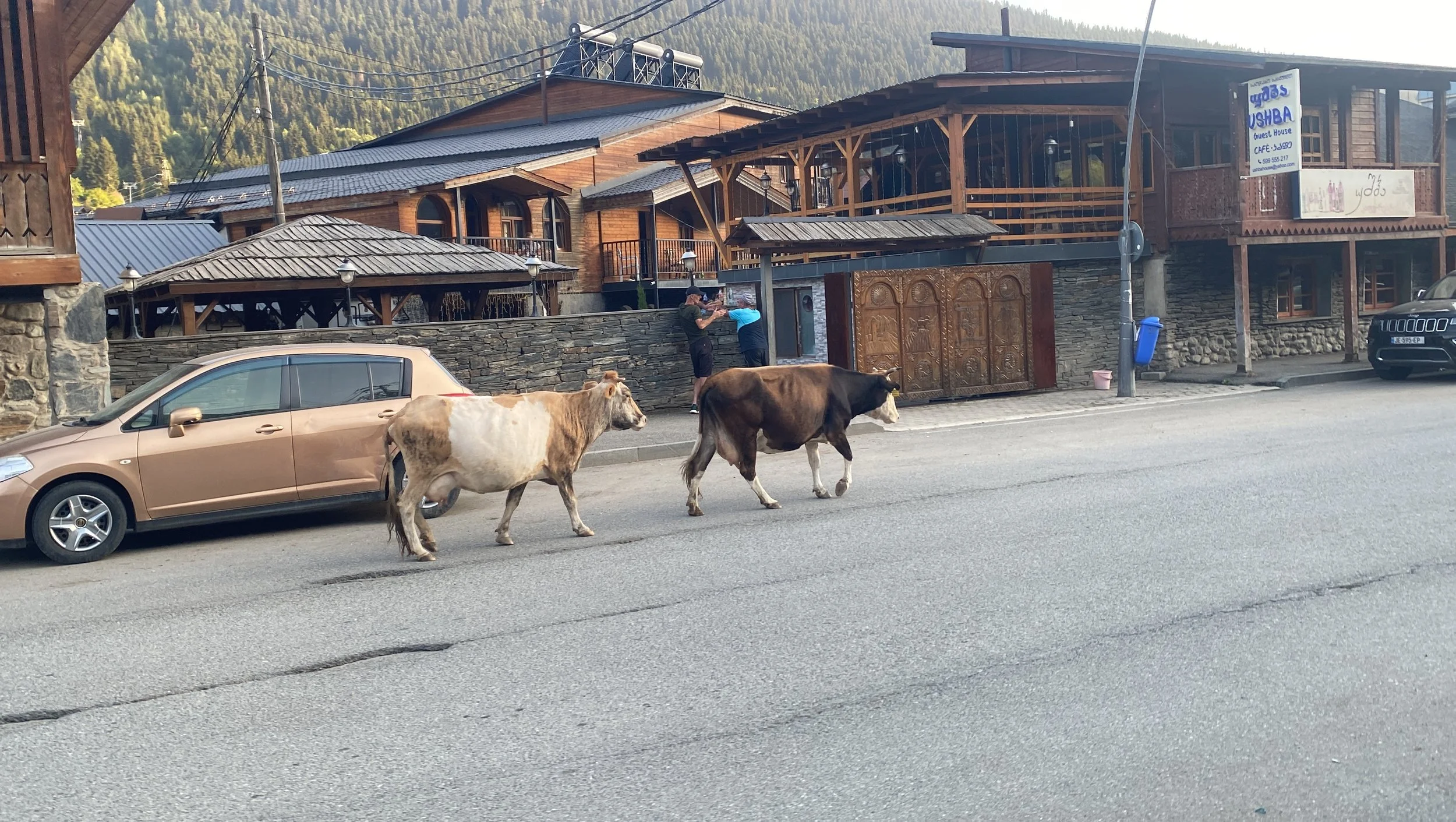
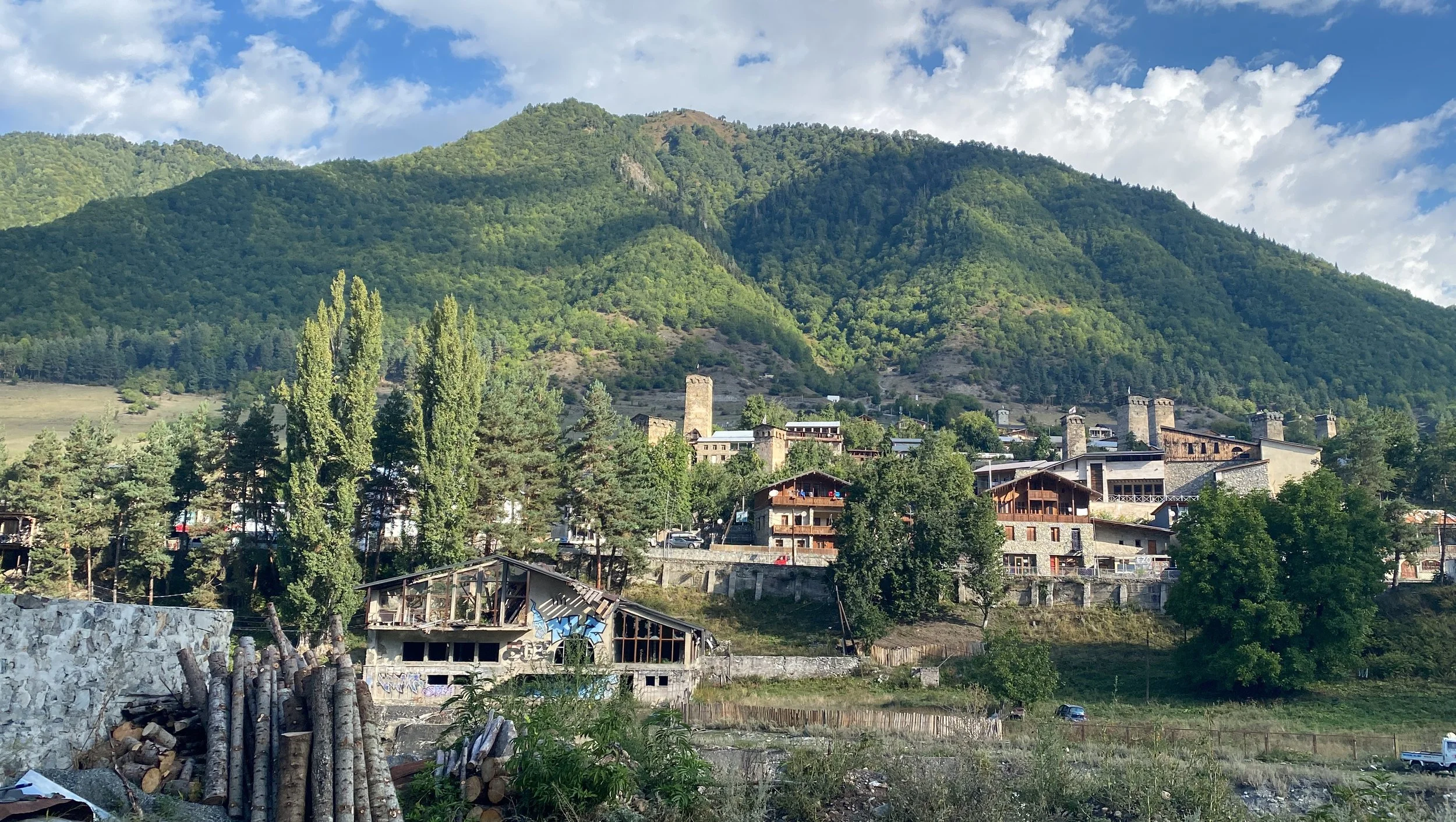
Located north in the Caucasus Mountains, the tourist village of Mestia has become one of Georgia’s most visited destinations due to its stunning scenery and popular hikes. Throughout the Svaneti region, you will find small, fortified towers scattered around the hillsides known as the Svan towers. With most of them standing between 20 and 25 feet tall, these towers were built between the 9th and 13th centuries to defend against invasions and natural disasters.
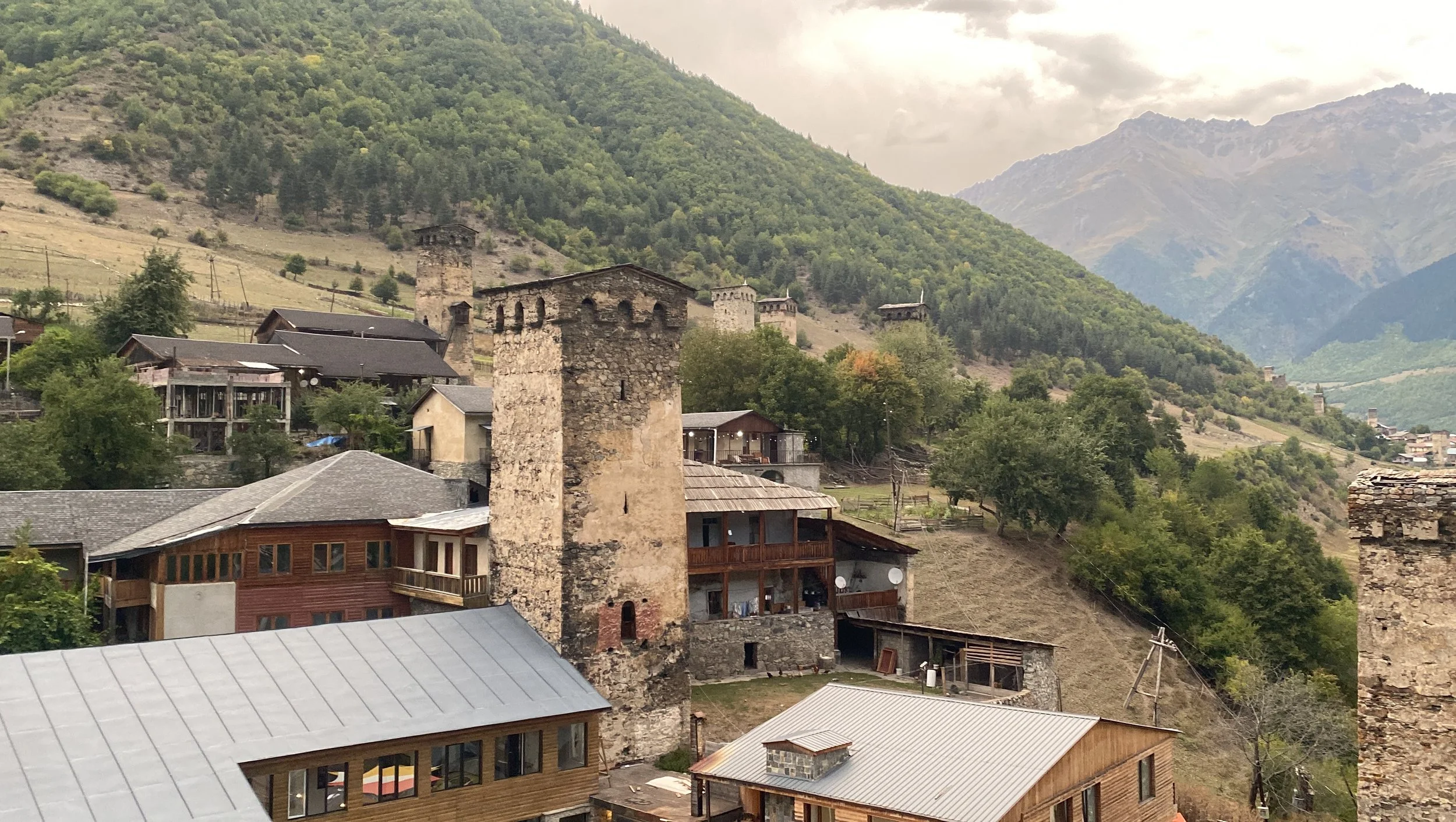
A family’s tower was generally connected to their house and they would retreat to the towers in case of emergency. The bottom floors were used for living and storage and the upper floors were used for defense. They seem to all be privately owned, but there are a few that you can tour for around $1.50.
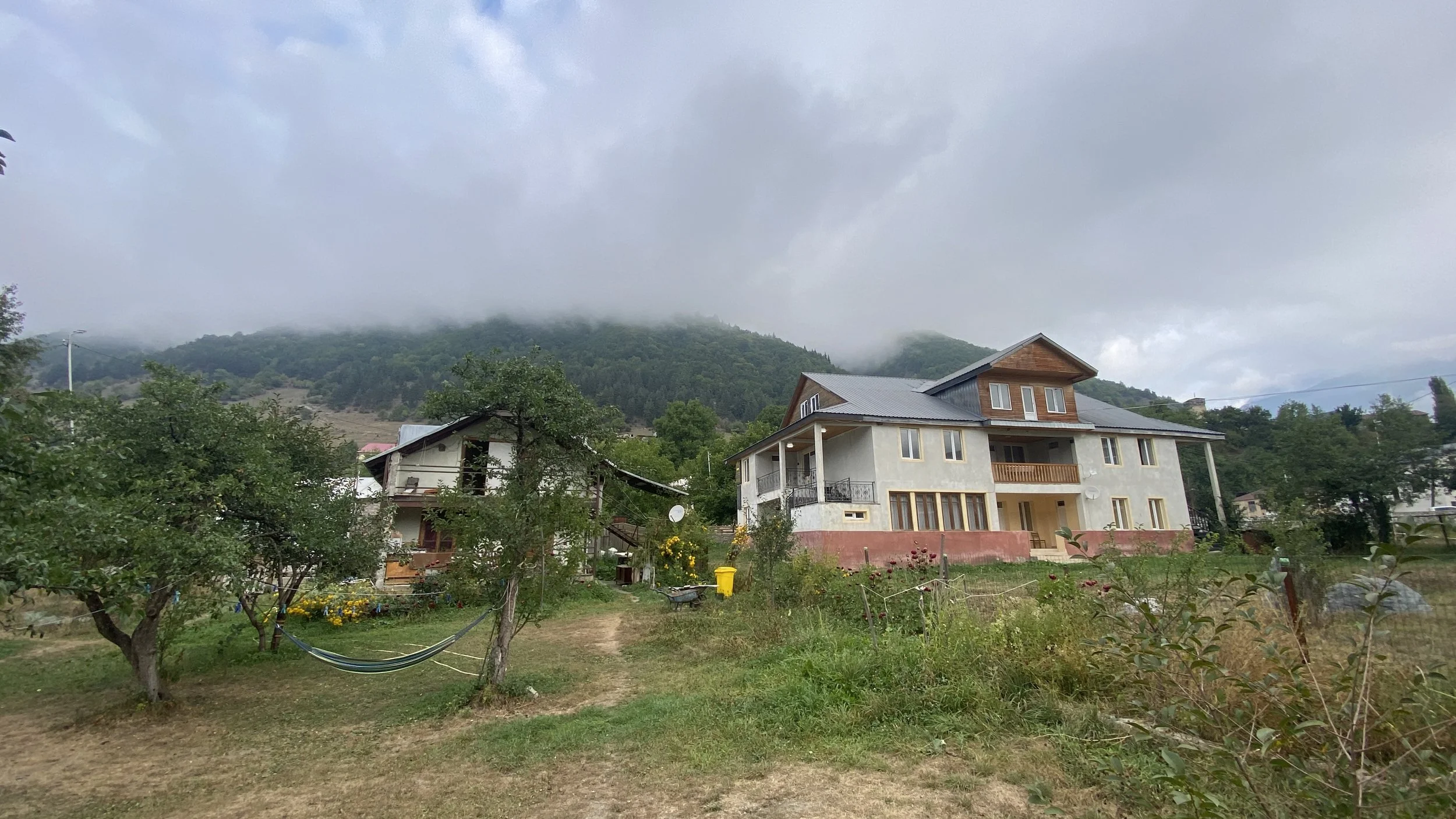
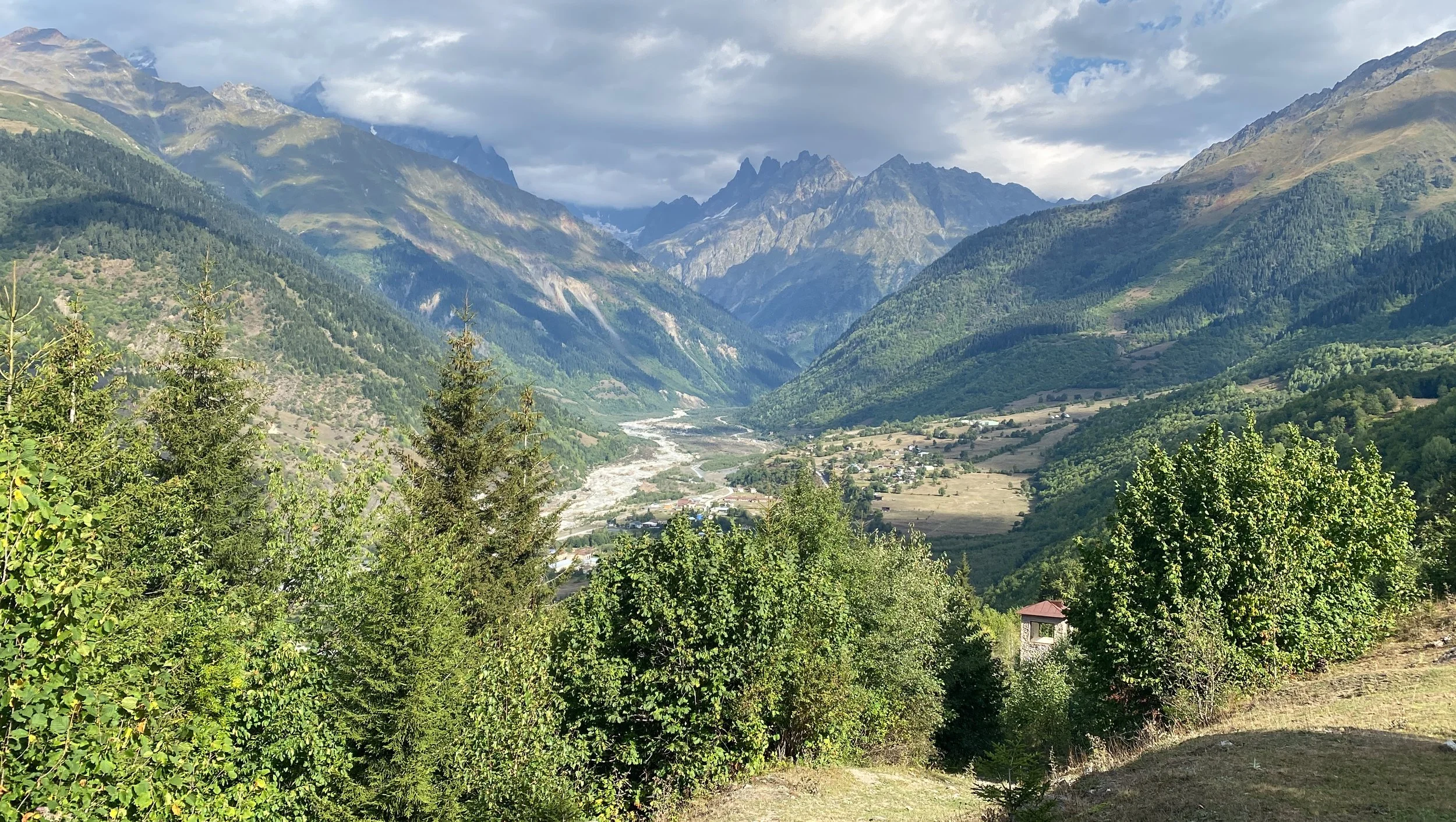
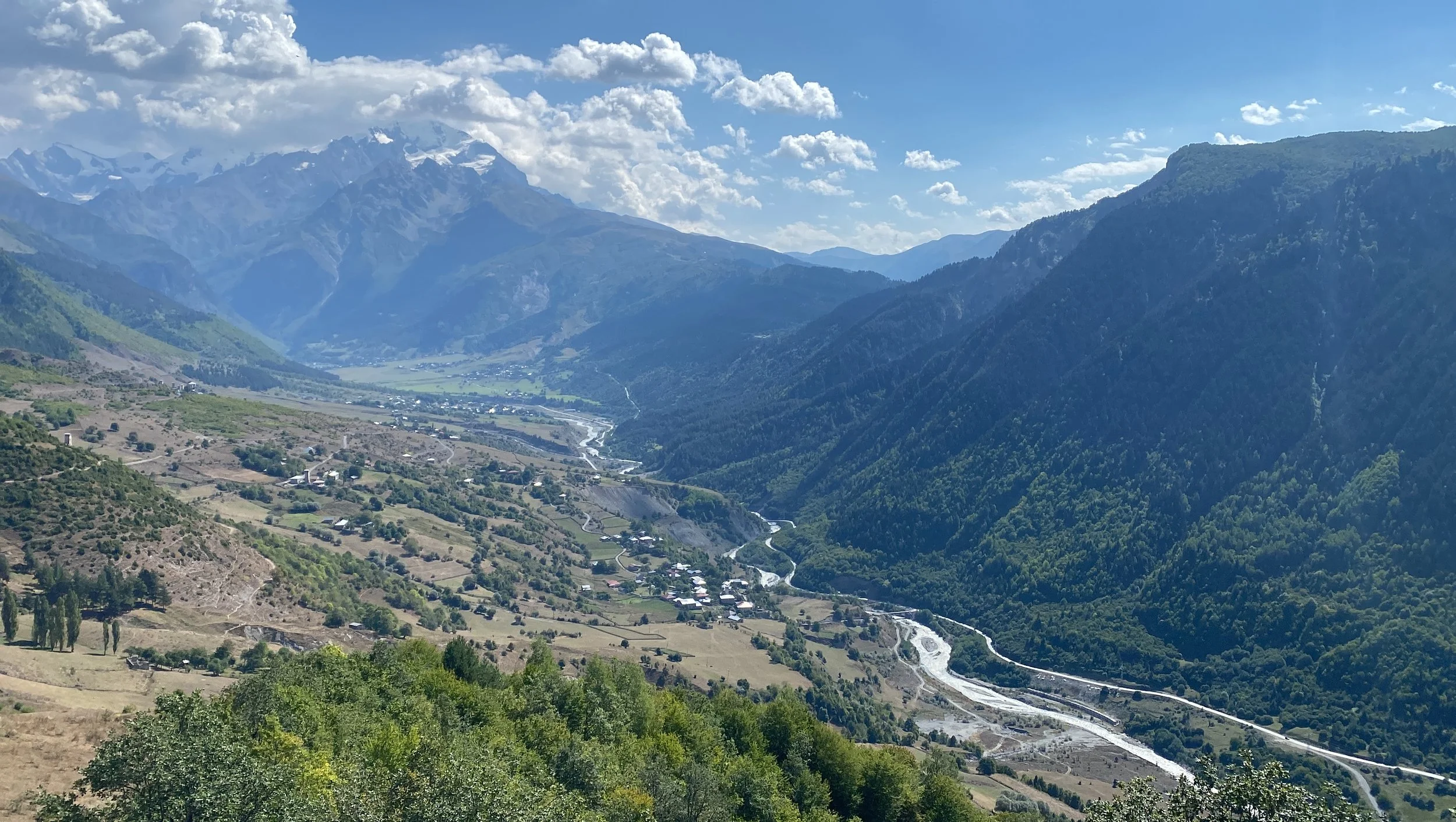
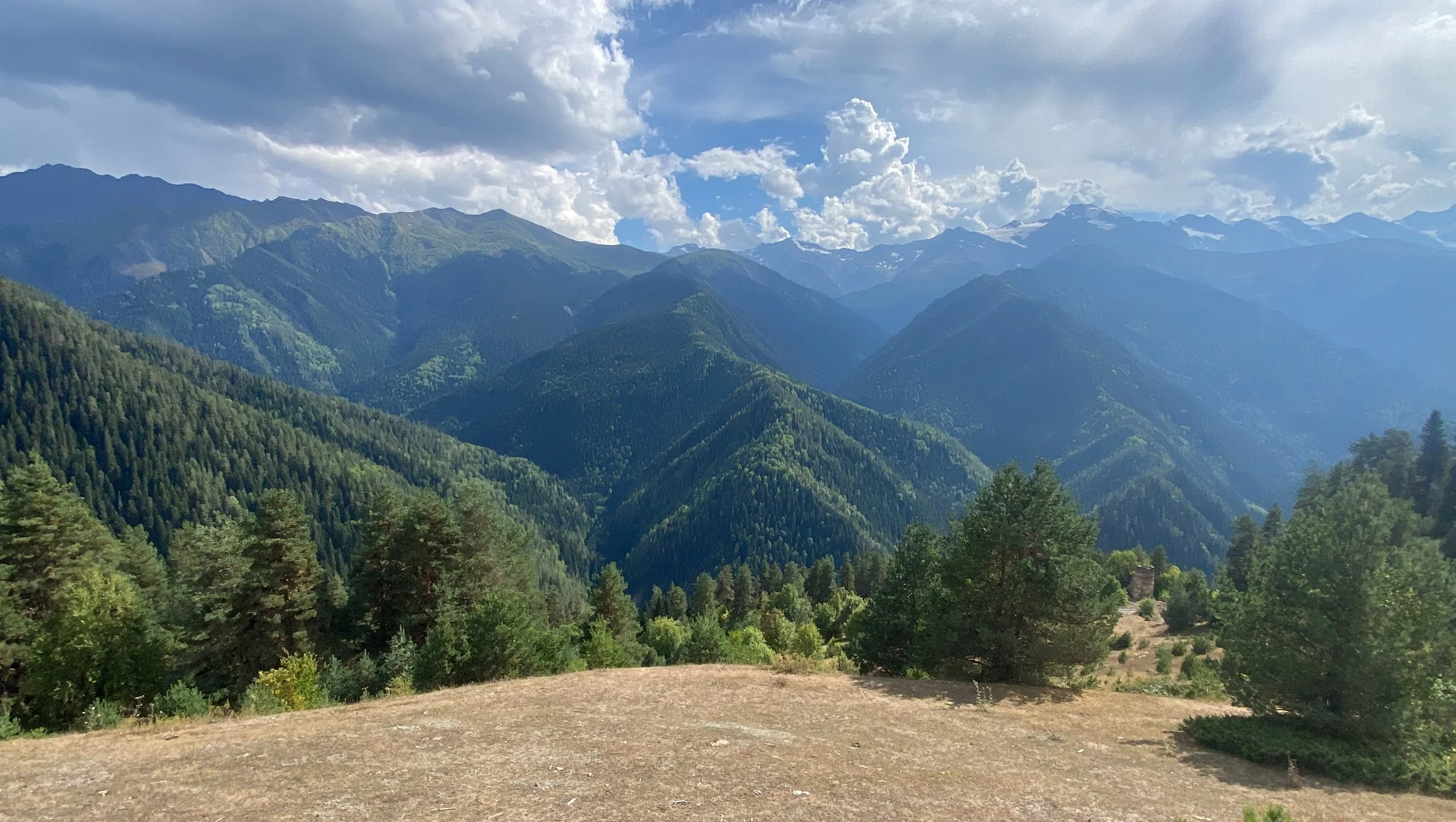
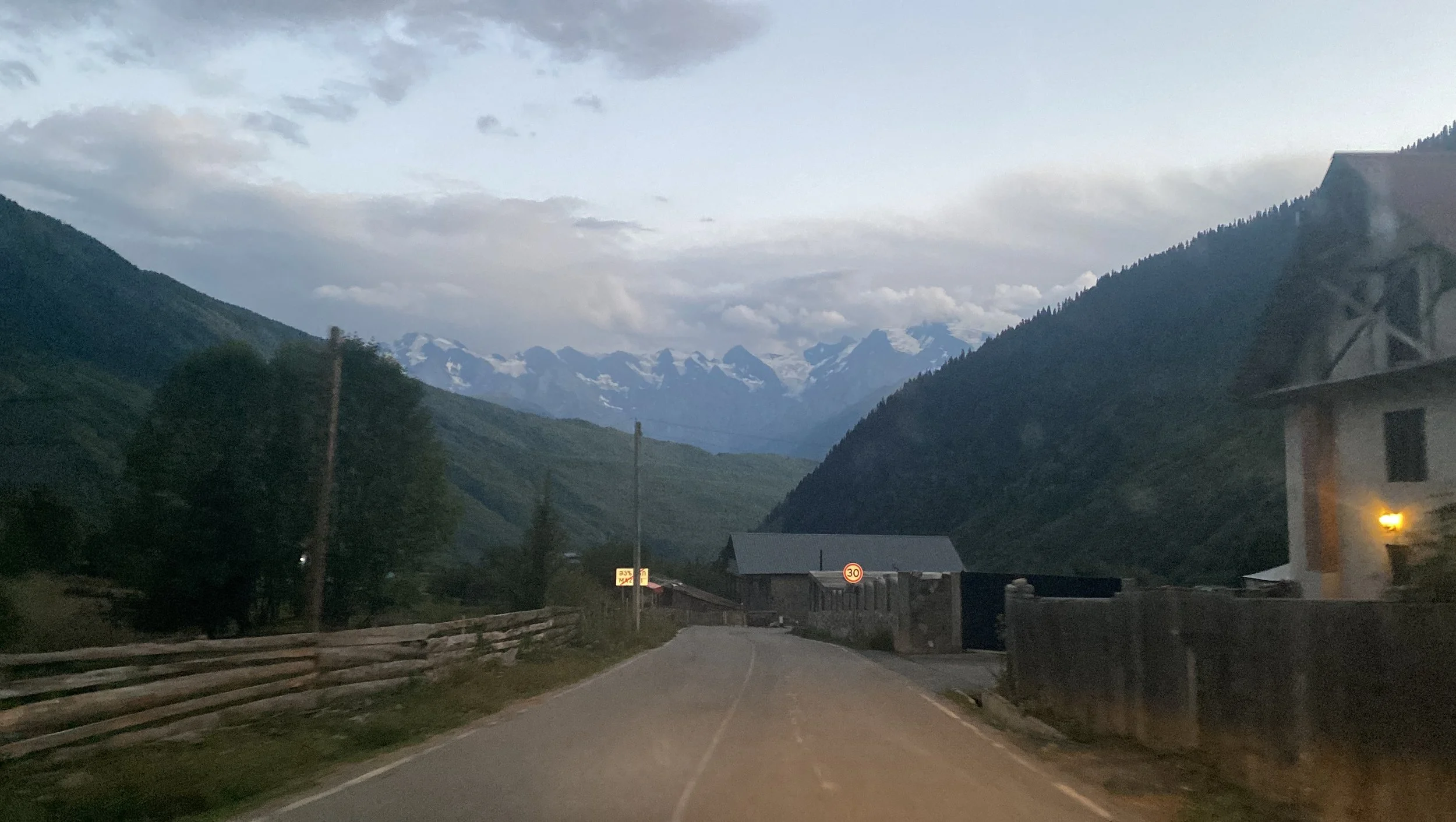
One challenging day hike goes up to Koruldi Lakes, which are really just a few large ponds (don’t get me wrong, the views are absolutely worth the effort). It’s accessible by vehicle if it has the proper tires, and so is the path to the peak of the mountain. Hikers will generally camp at the lakes and then make their way up to the peak the next day. It only takes a few hours to reach the peak from the lakes, but the hike to the lakes is quite taxing even for experienced hikers, especially if you’re carrying camping gear.
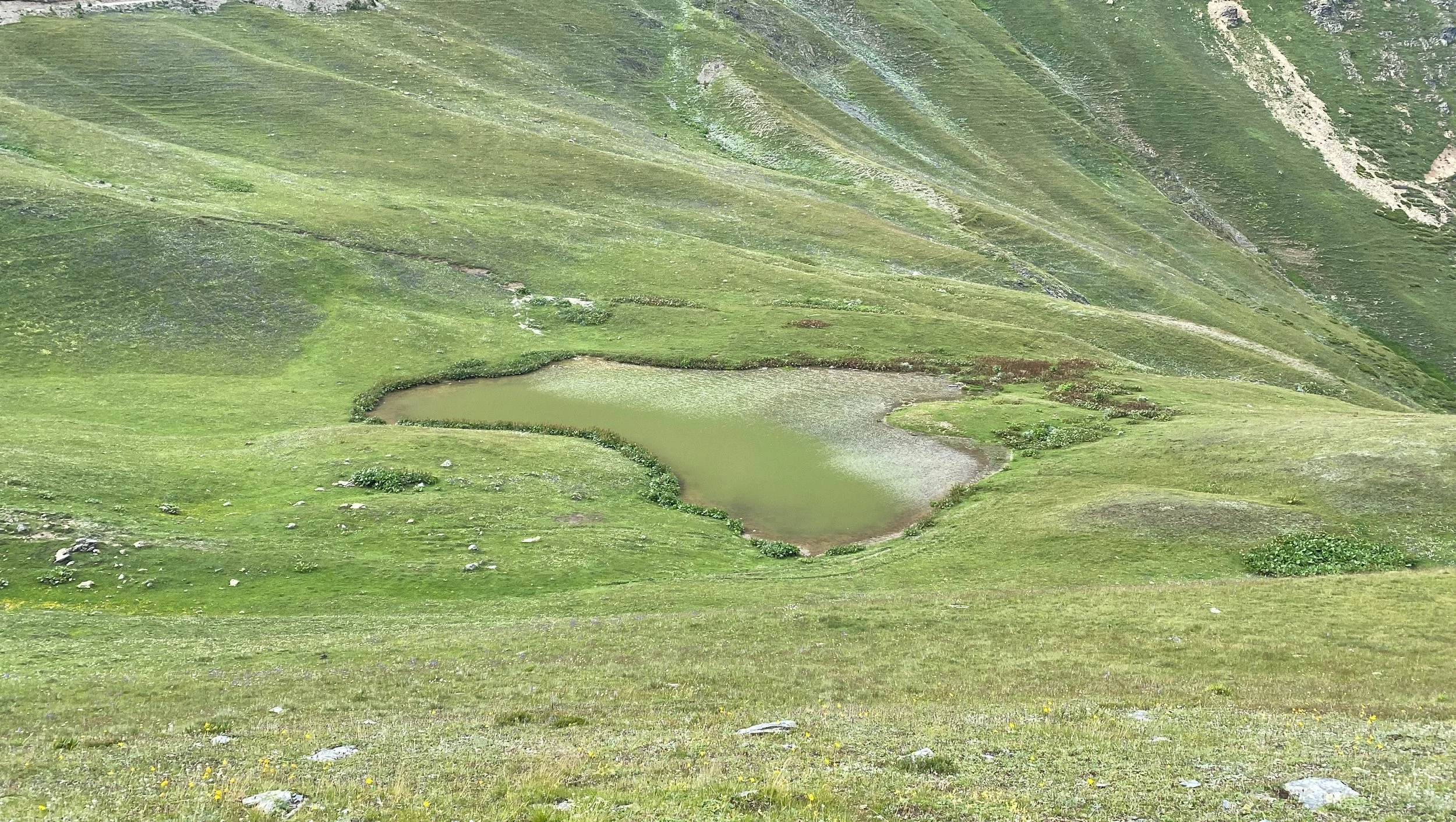
This is one of the lakes that everyone is talking about.
The most famous excursion is the trek from Mestia to Ushguli, a trail that is part of the nascent Transcaucasus Trail which stretches through Armenia, Georgia, and Azerbaijan. The hike generally takes about 3-4 days to complete. You can obviously camp and cook in the woods if that’s your thing, but most people choose to stay overnight at one of the guesthouses in the various remote villages along the path.
The views during this hike are supposedly stunning, and a lot of people come to Mestia just to do it. After spending a few weeks at Svanland Hostel, a peaceful hostel outside of town, for $6 a night, I decided to get it over with before I went back to Tbilisi. Unfortunately, I slipped and fell off a narrow trail along, badly spraining my ankle. Unable to proceed any further. Luckily, I was able to grab ahold of a small tree, which undoubtedly saved me from getting seriously injured even more.
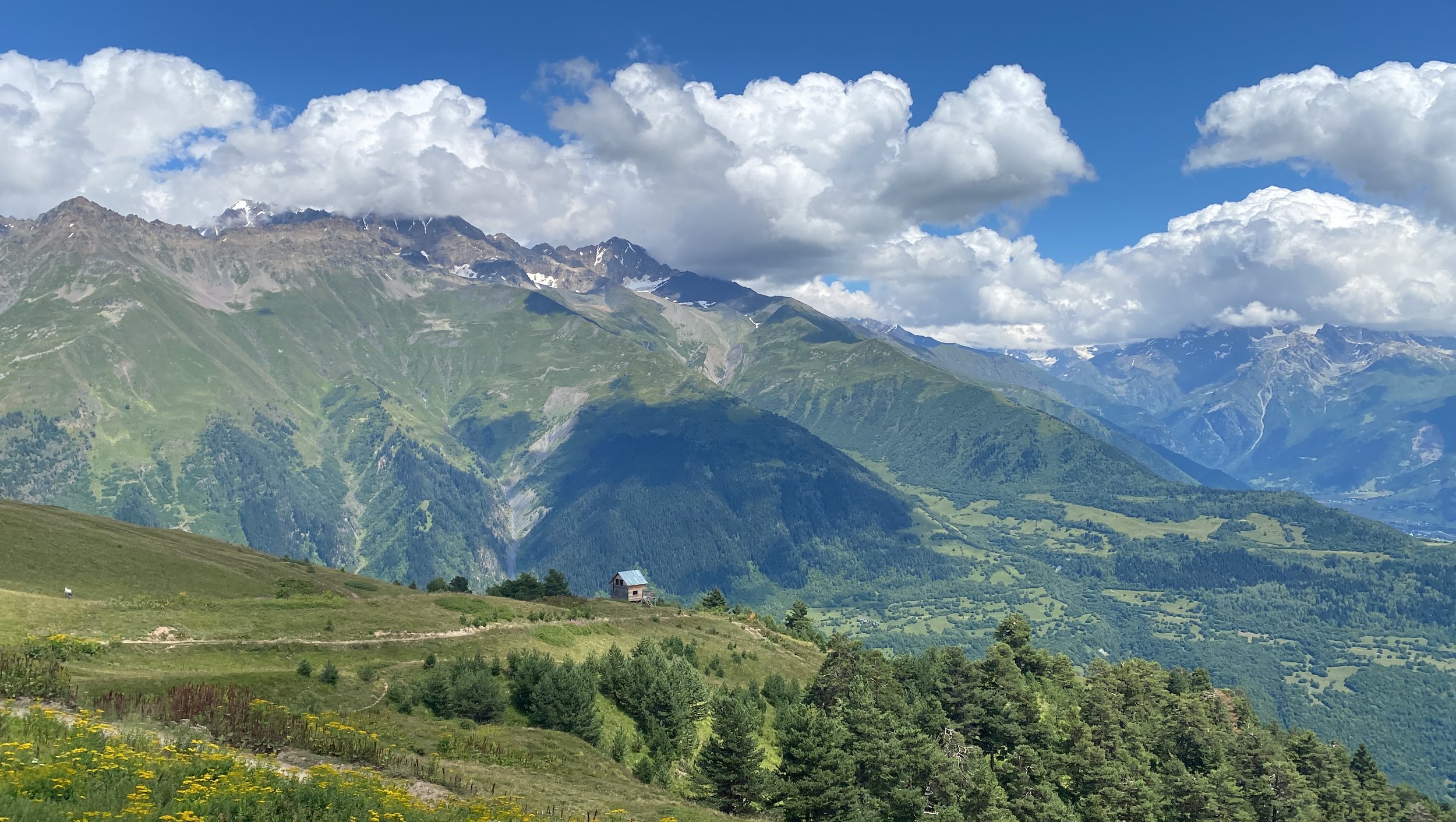
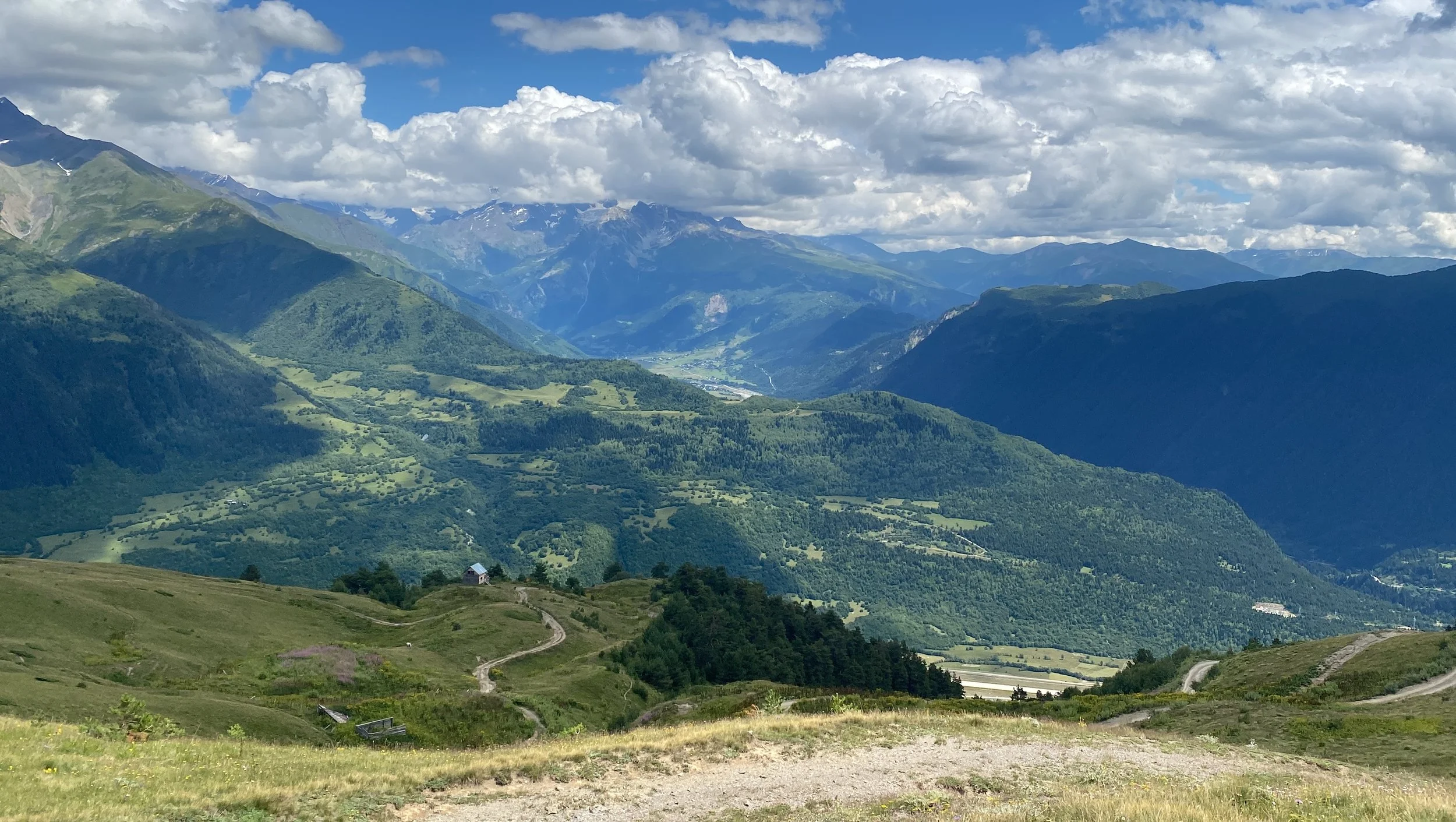
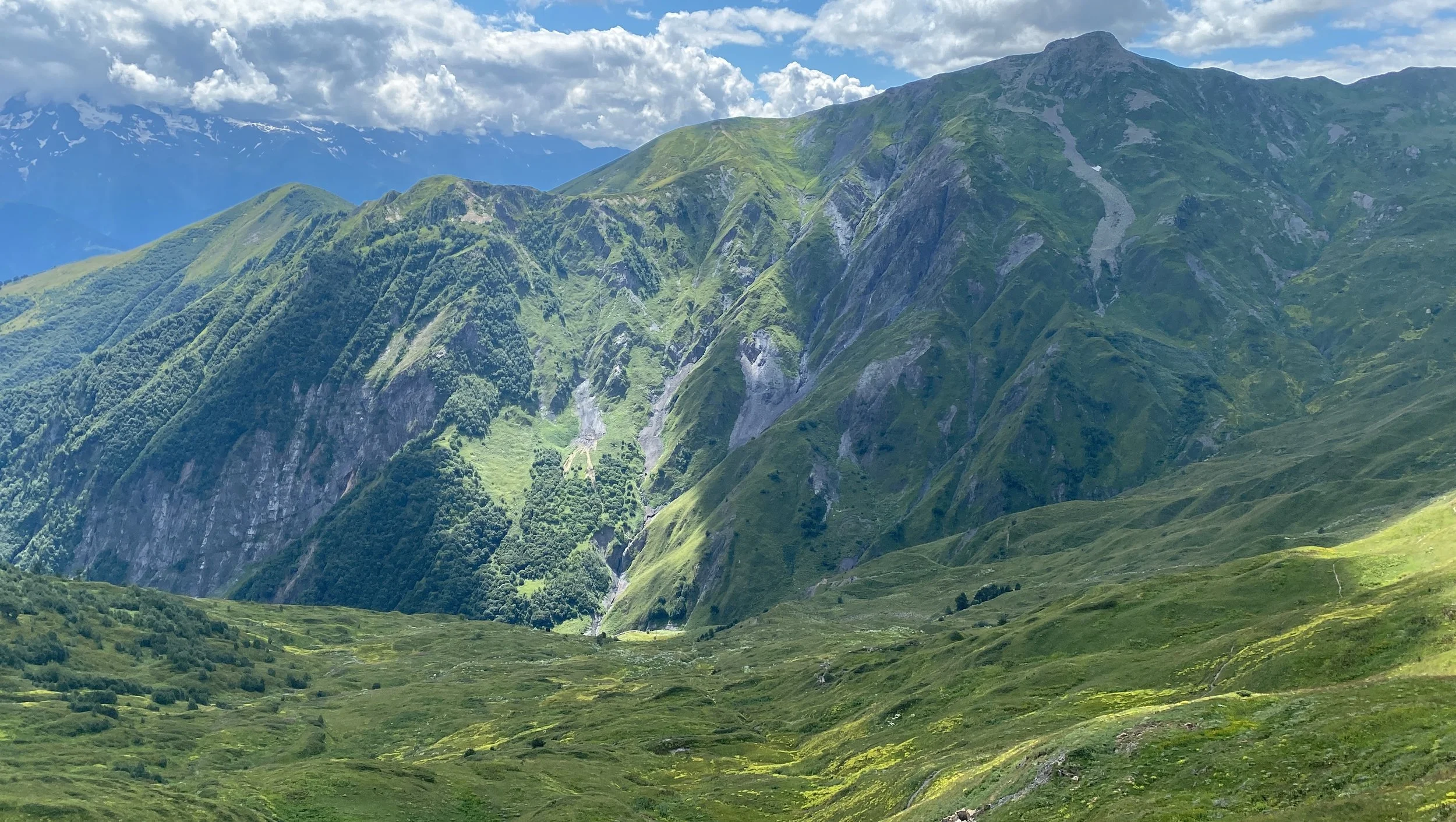
There was a resting point that overlooks a small village that I left less than half an hour ago, so I hobbled back to it and talked to the man behind a shady kiosk, woven from nearby tree branches, selling drinks. He had a small, single-cab truck with the bed sides lowered, and said that was leaving in a couple of hours. I called the hostel owner to come get me, who later met us down the mountain.
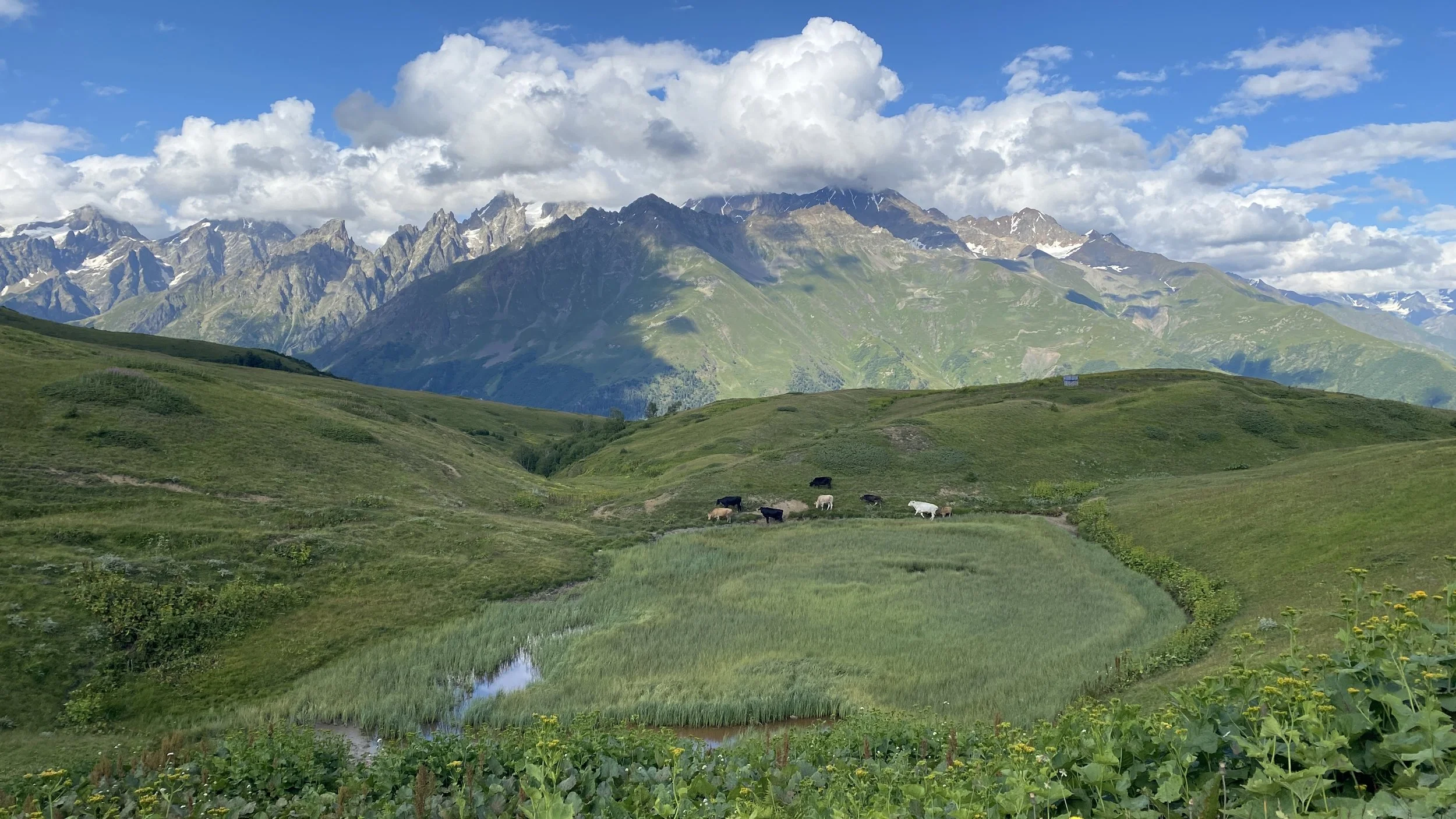
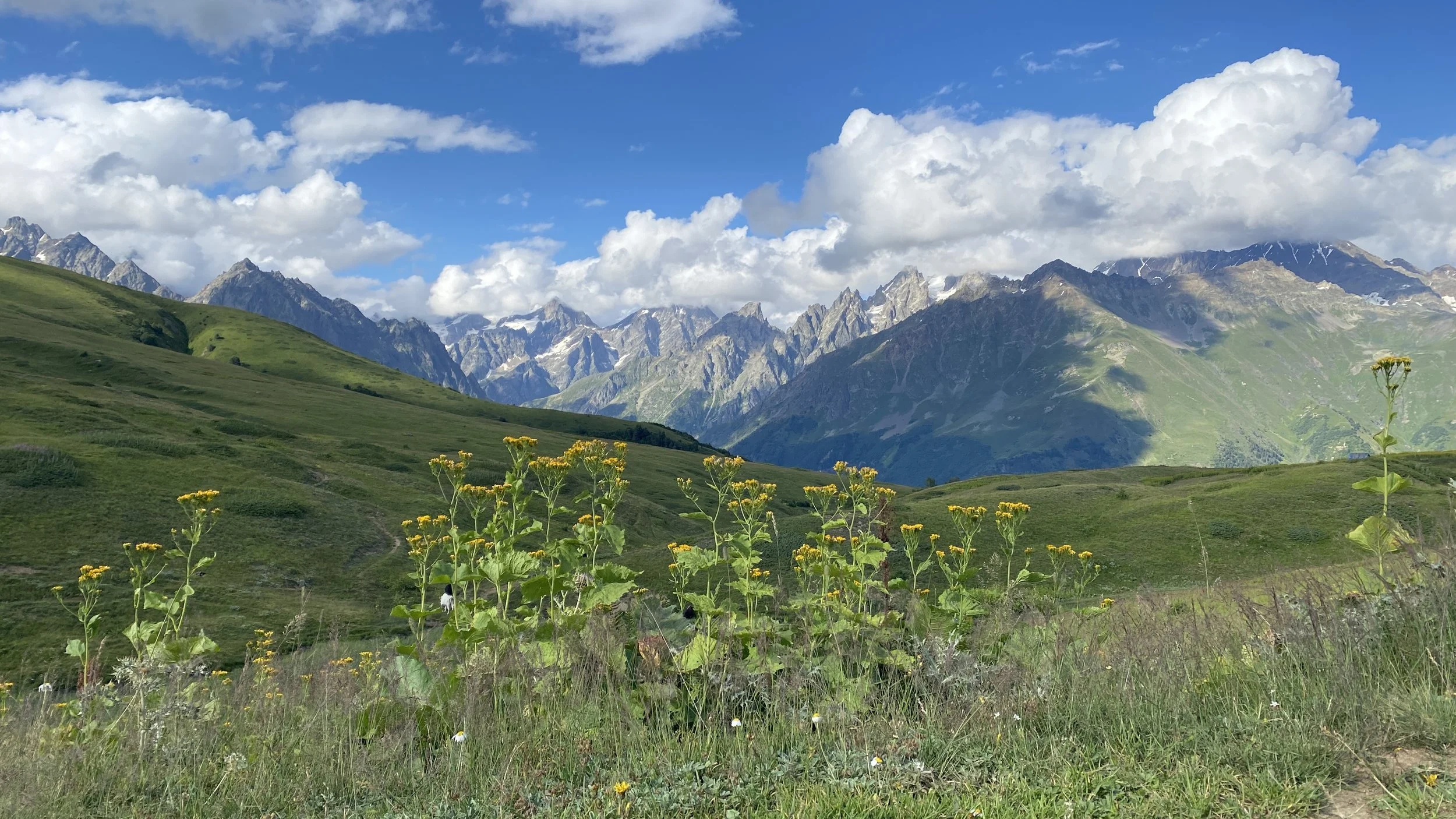
The hike itself isn’t all that challenging from what I’ve been told, it’s just long. But the views are said to be quite stunning and definitely worth the time and effort. There are times when the trails will split in two, with one being a bit strenuous but with nicer views, and the other less challenging and more leisurely. I chose the more difficult path and ended up rucking a heavy backpack underneath low-hanging tree branches. What happened to me is uncommon, so don’t let this story deter you from doing it.
Tbilisi
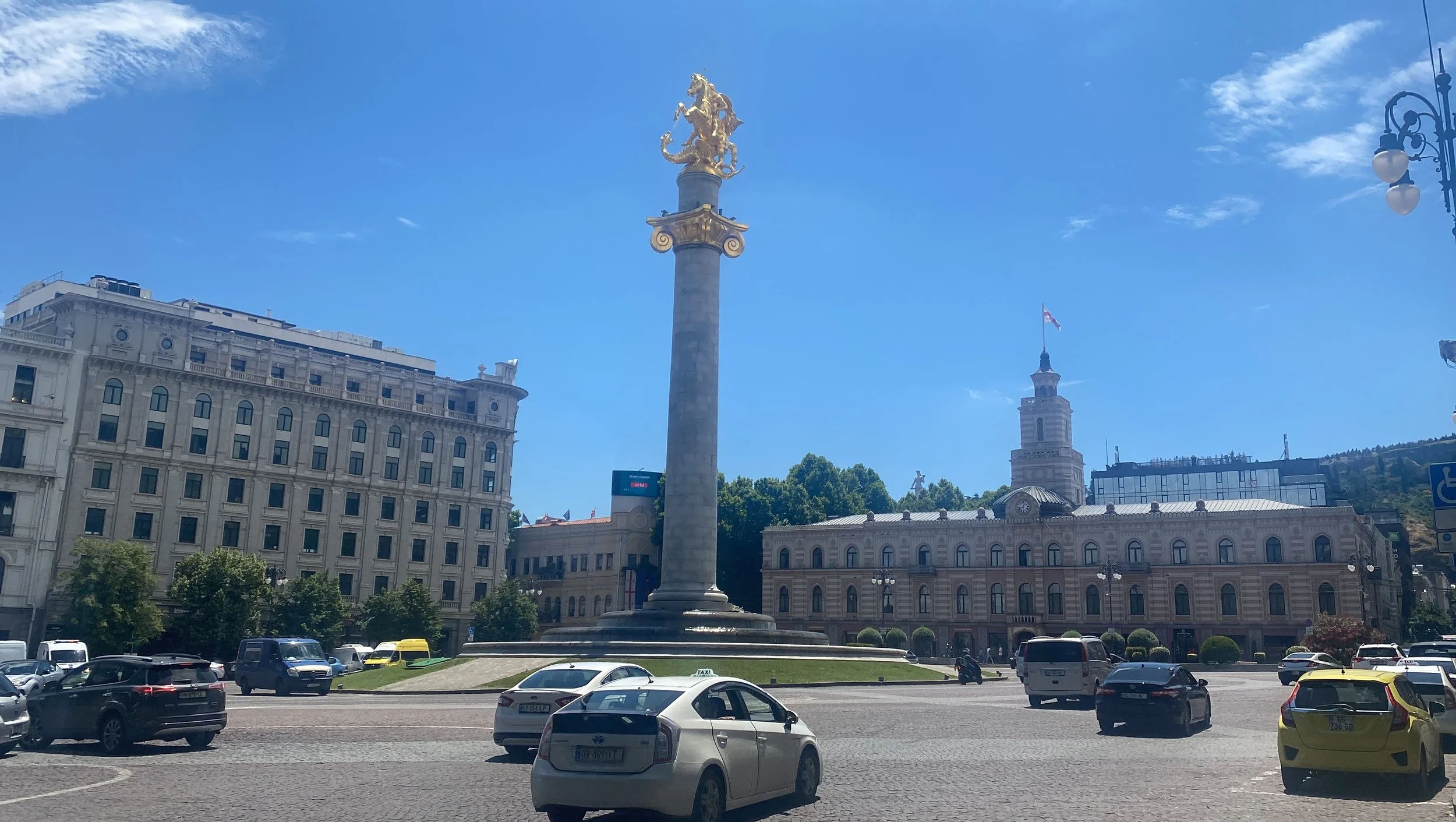
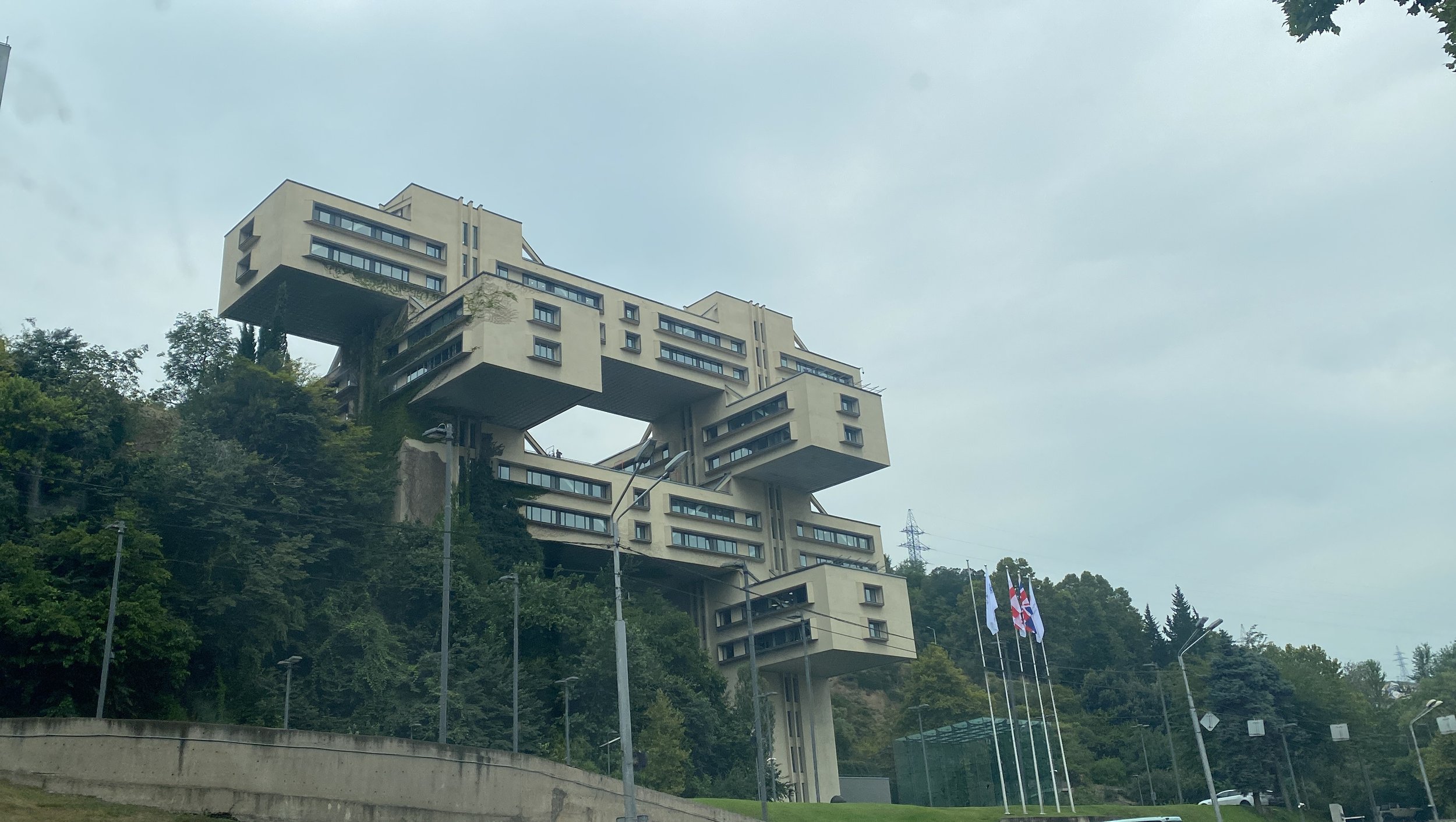
Comprising a third of the population, Georgia’s verdant capital city, Tbilisi, serves as the country’s cultural and financial hub. Traffic can get pretty crazy, so avoid renting a car if you can. Luckily, Uber and taxis are pretty cheap, usually costing just a few dollars. On the low end, you can find a hostel for around $6 or $7 and can find some pretty good deals on private rooms ranging from $12 to $15. If you arrive by car or bus, you will notice some interesting architecture scattered around. There’s a nice mixture of old and new.
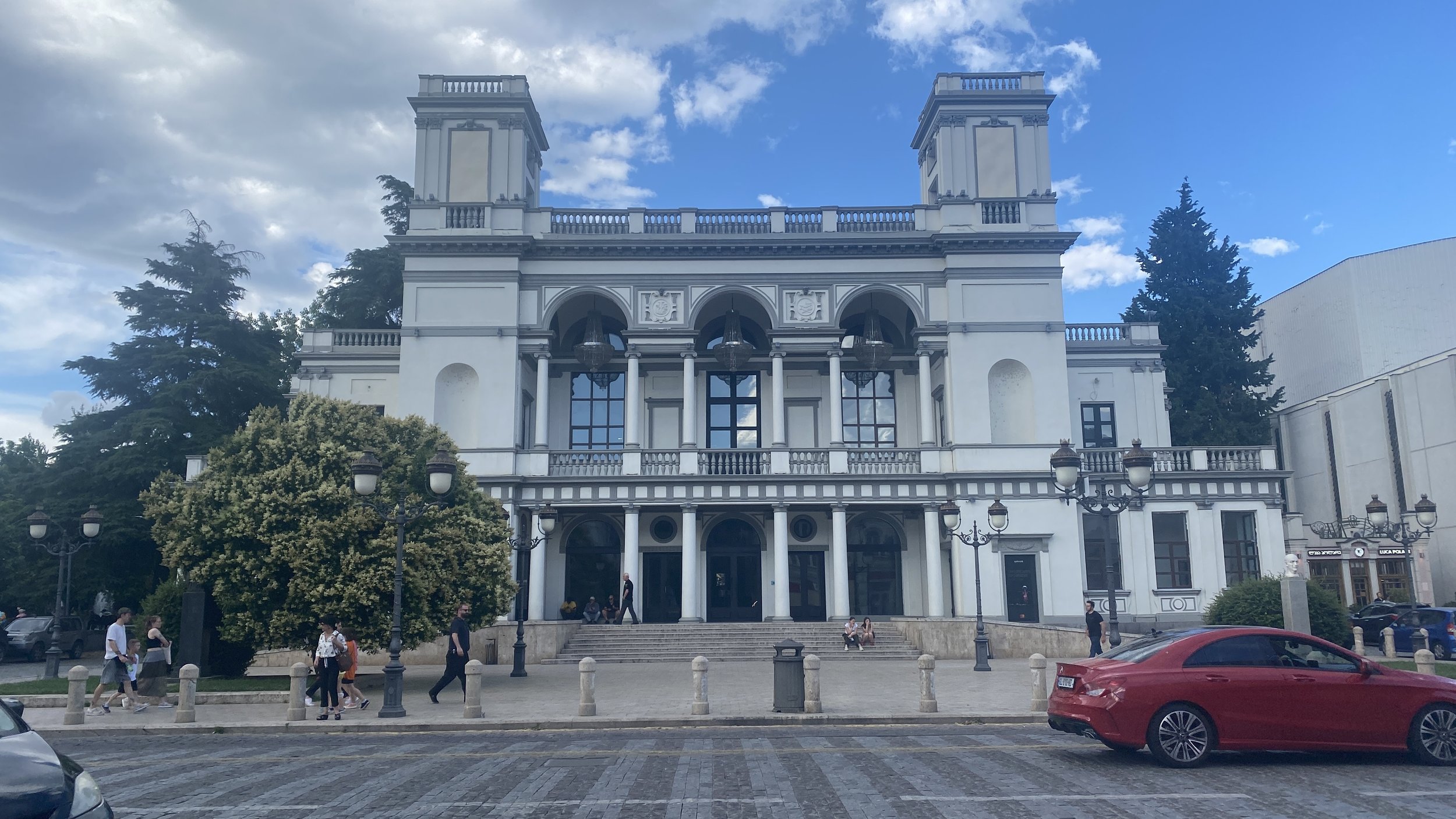
The sprawling Old Town, or Altstadt, offers a plethora of traditional restaurants, bars, and clubs. Divided by the Kura River, the colorful and symbolic pedestrian Bridge of Peace illuminates the walkway with thousands of LED lights when the sun goes down. Connecting the Old Town with Rike Park, the bridge symbolizes a connection between Georgia’s tumultuous past and its future.
Scattered throughout the Old Town are ad hoc marketplaces of people selling Soviet-era knickknacks, old jewelry, military regalia, medals, and more. It’s definitely worth slowing down to check out what they have to offer if you happen to find one. Riding the funicular up to the gorgeous Mtatsminda Park and the ancient Narikala Fortress is also a popular and fun activity for tourists.
The activities list is long, but here is a short list of other popular activities and destinations.
Sulphur Baths
Holy Trinity Cathedral, Tsminda Sameba Cathedral, and the Metekhi Church
Tbilisi Botanical Garden
Georgian National Museum
Dry Bridge Market
Rezo Gabriadze Marionette Theater
Rustaveli Avenue
Vake Park
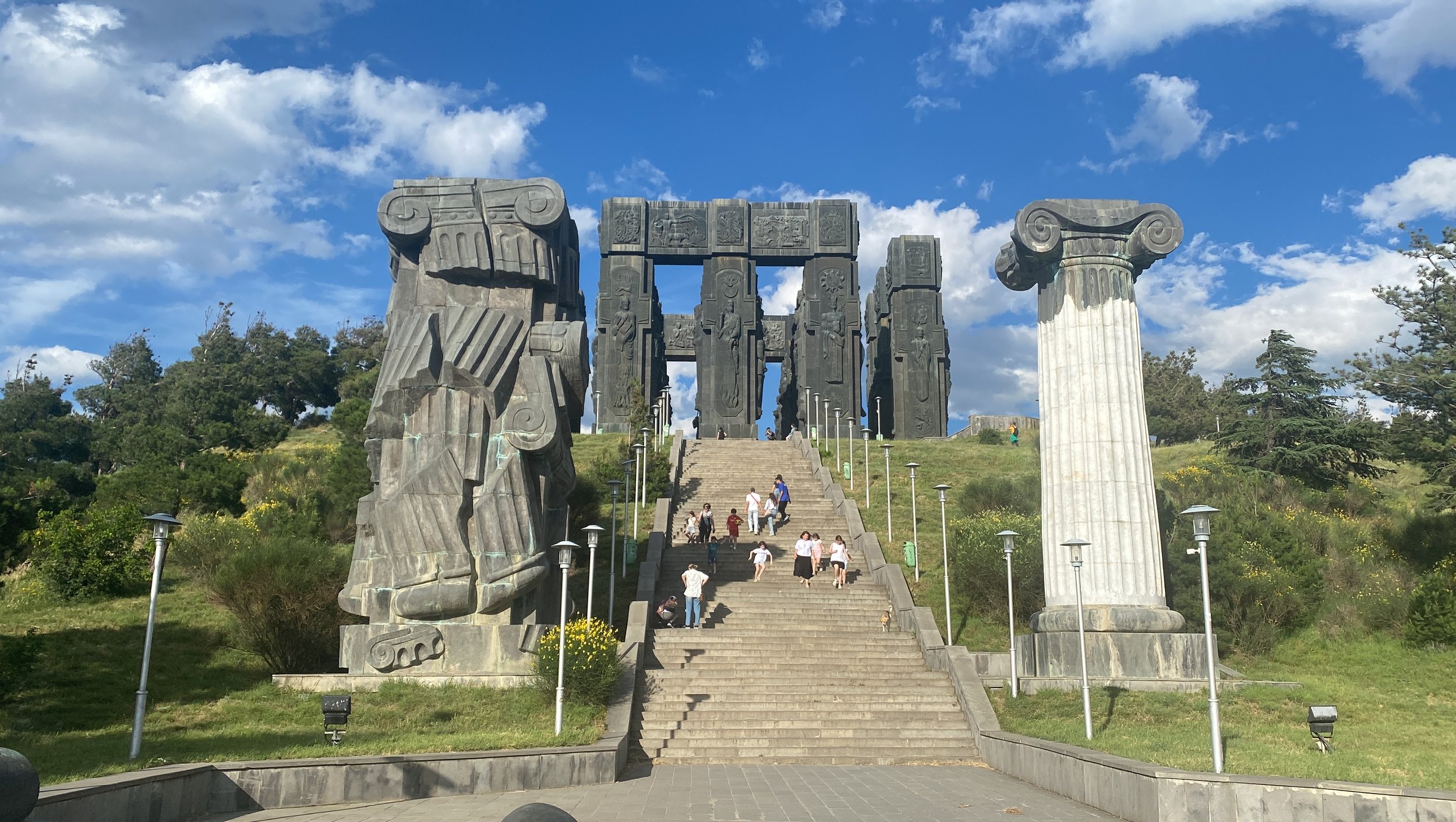
Chronicle of Georgia Monument
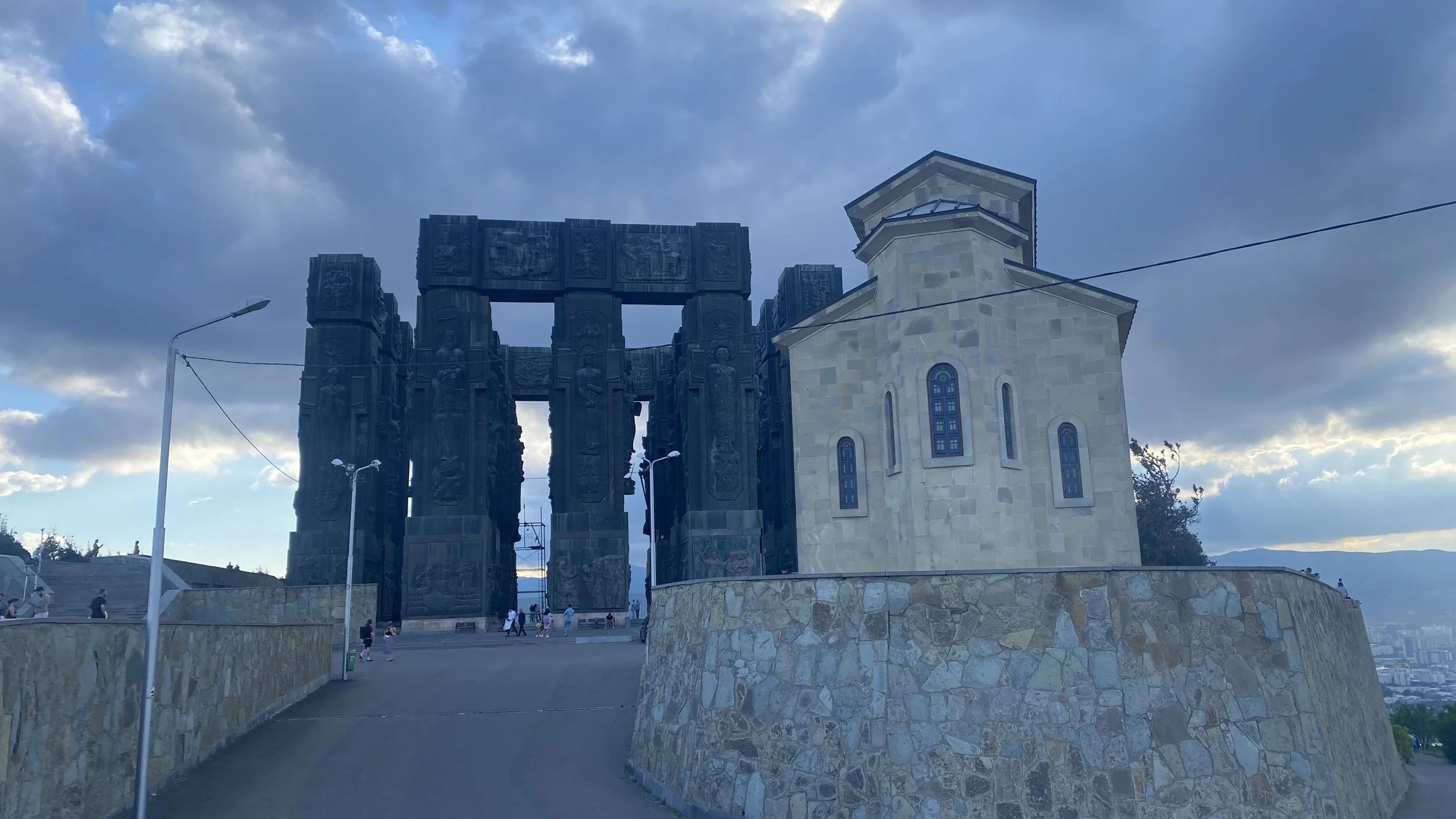
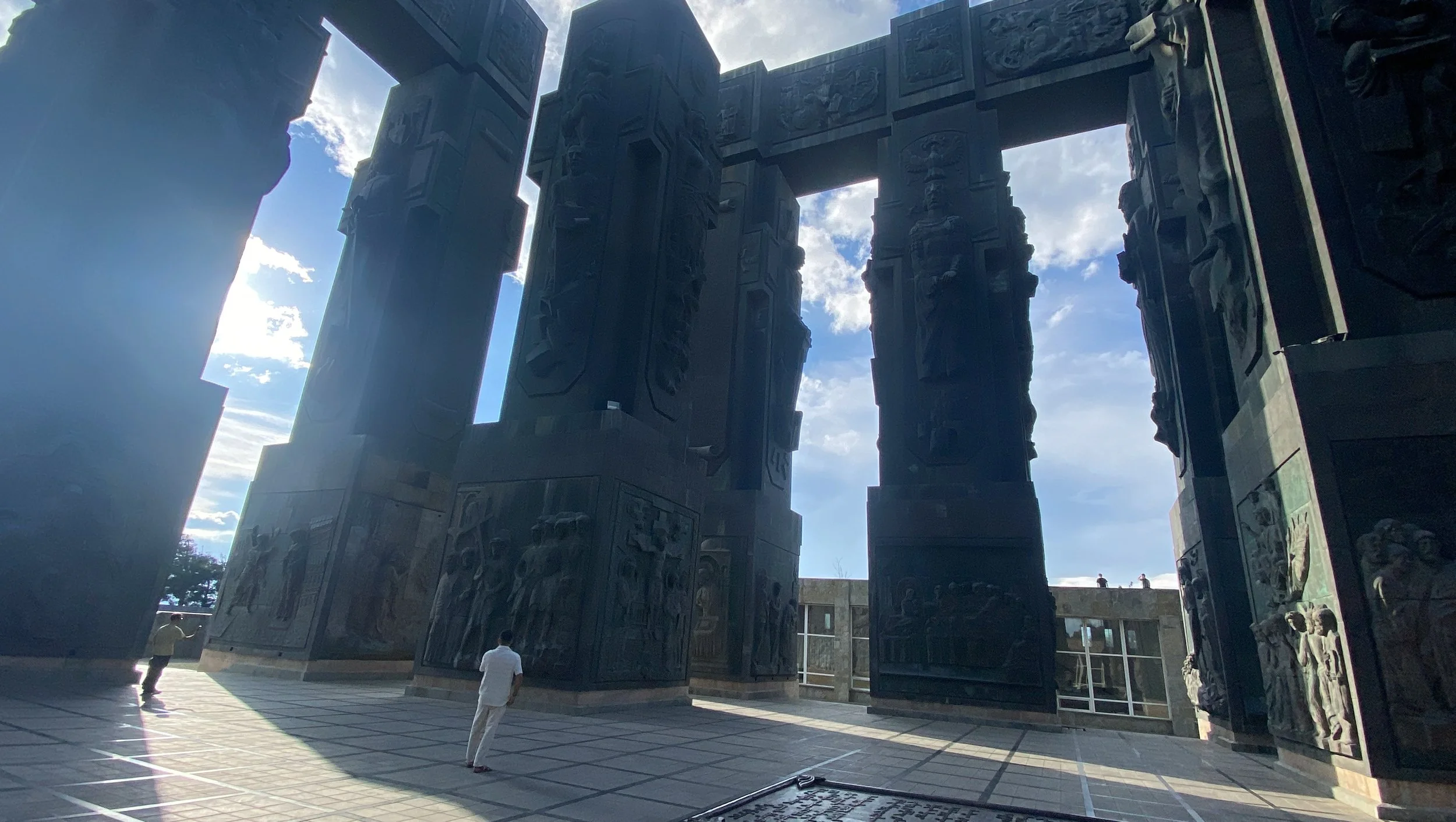
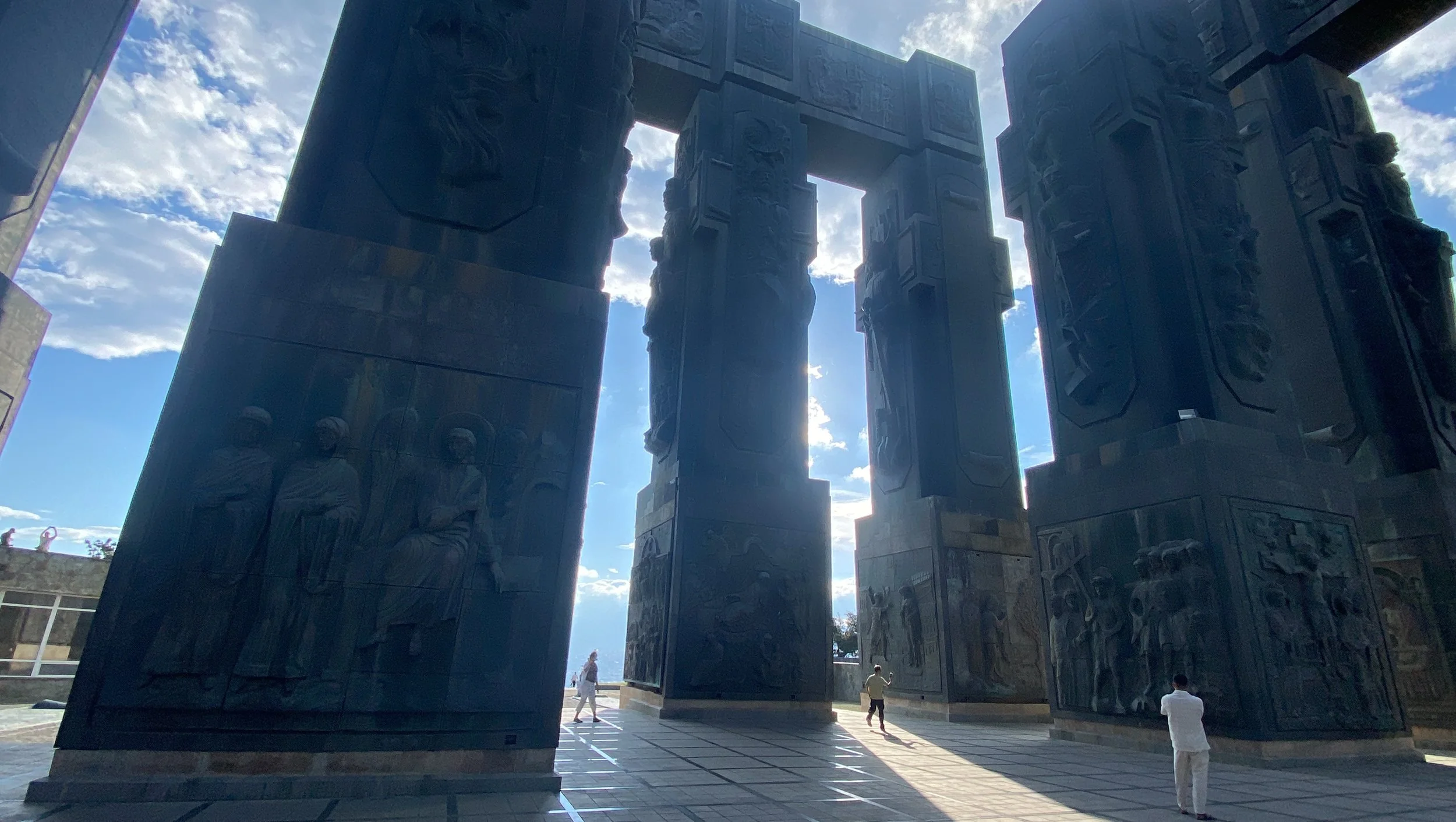
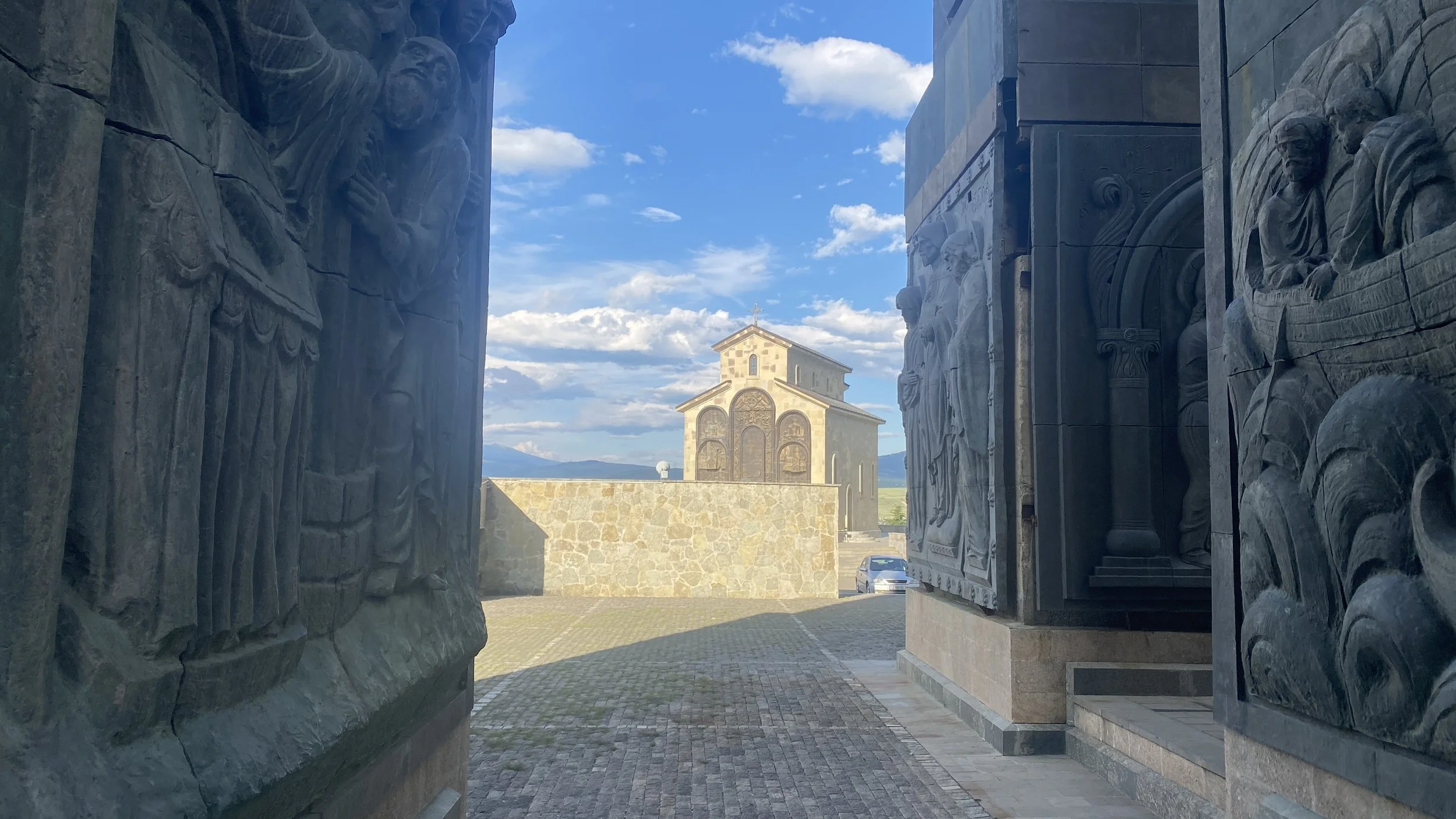
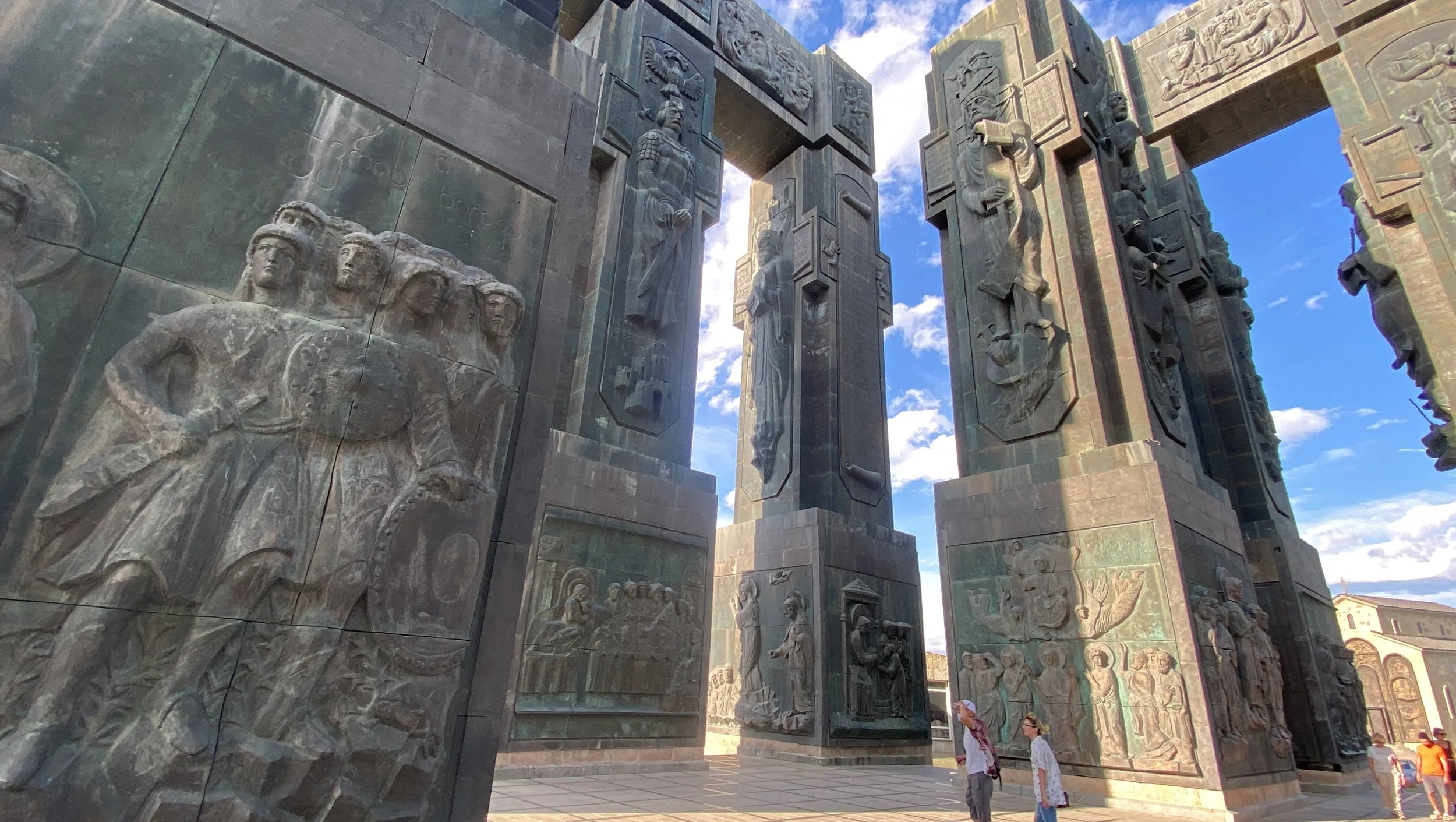
Gori
Stalin Museum
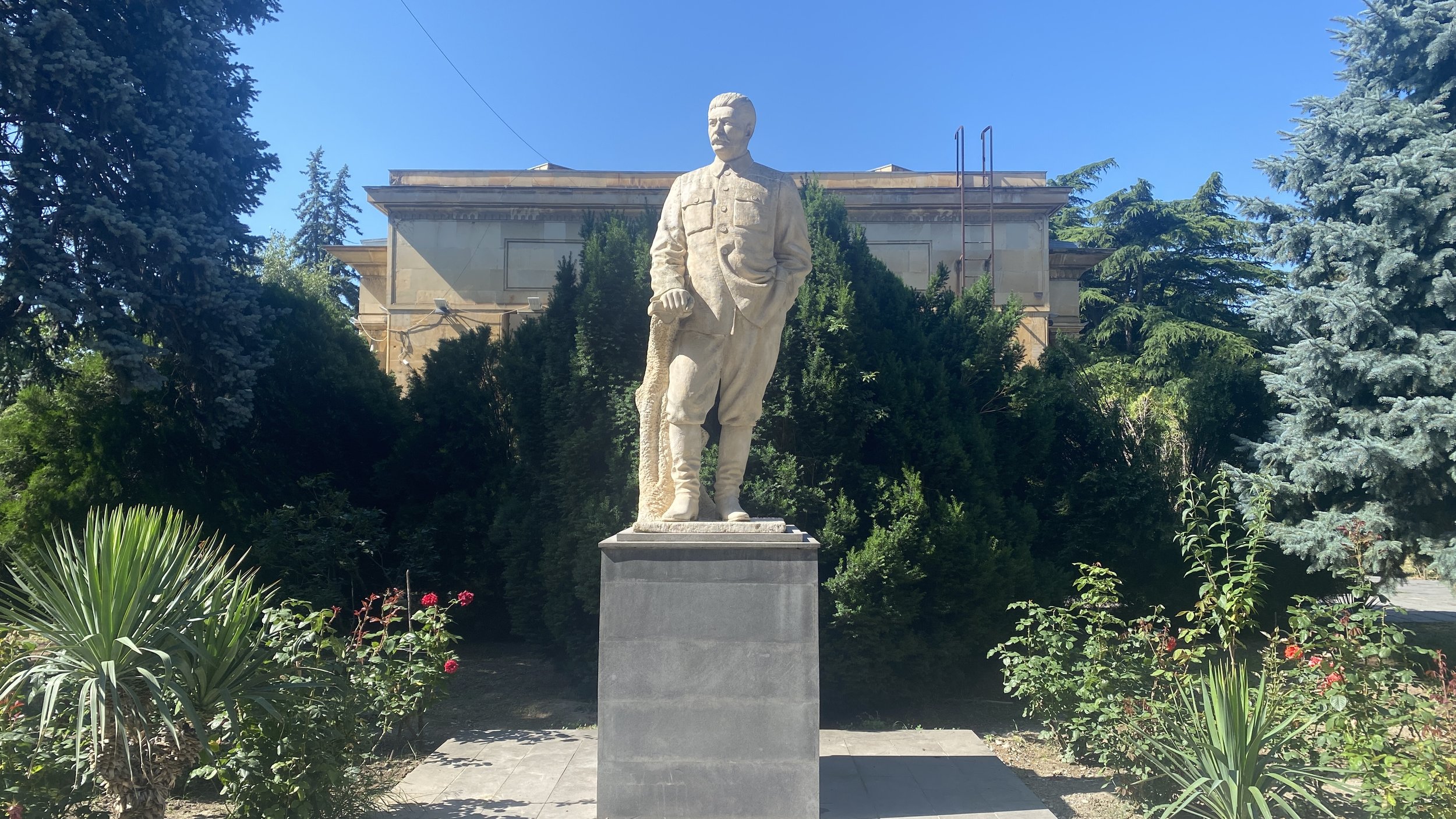
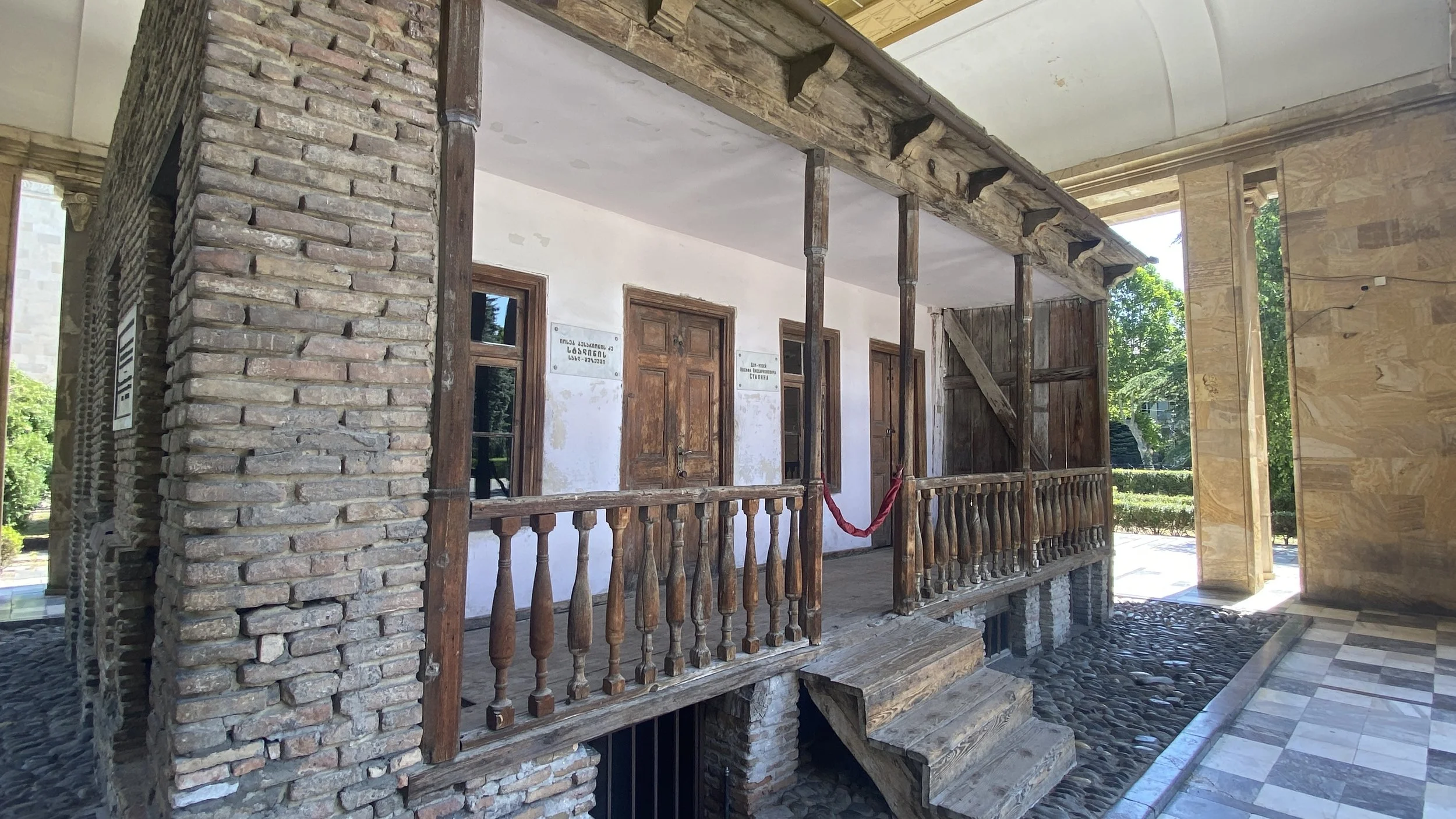
Gori is a small city where one Mr. Iosif Vissarionovich Dzhugashvili, later known as Josef Stalin, was born in December 1878 — a proper year for someone like Stalin to be born. Russia’s victory over the Ottomans had solidified its influence in the Caucasus region, while Georgian nationalism was beginning to emerge in response. Both developments would play a significant role in shaping Stalin during his formative years. The museum was dedicated to Stalin in 1957, four years after his death. His old house still stands but remains mostly inaccessible.
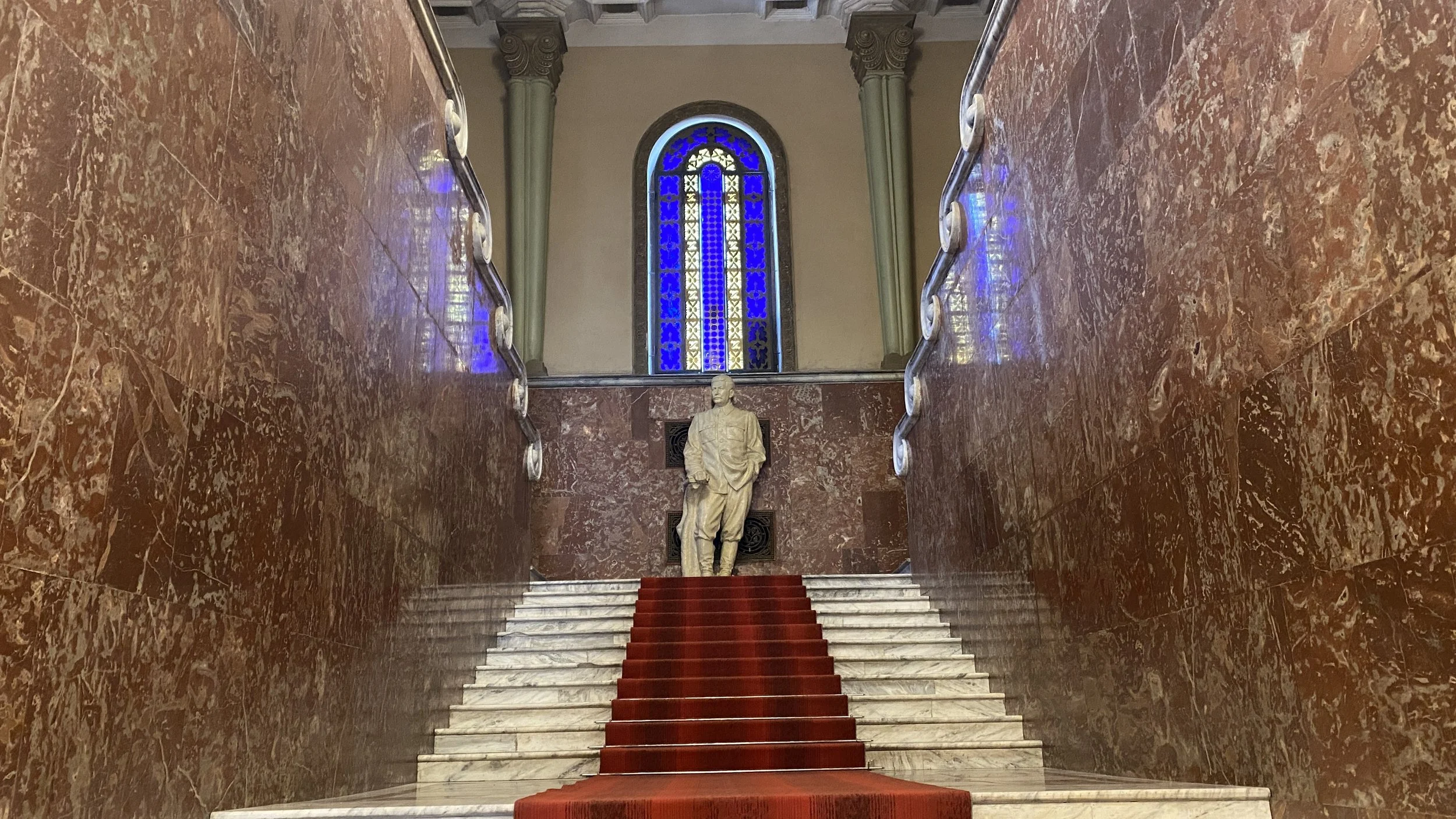
The museum doesn’t really say much about him as a person, it mostly displays artifacts from his life and time as the Soviet dictator. There is no real narrative to be read, although there is a small hallway in the corner of the museum that acknowledges the darker aspects of Stalin’s rule, including the purges, Gulags, and widespread repression.
Uplistsikhe Cave City
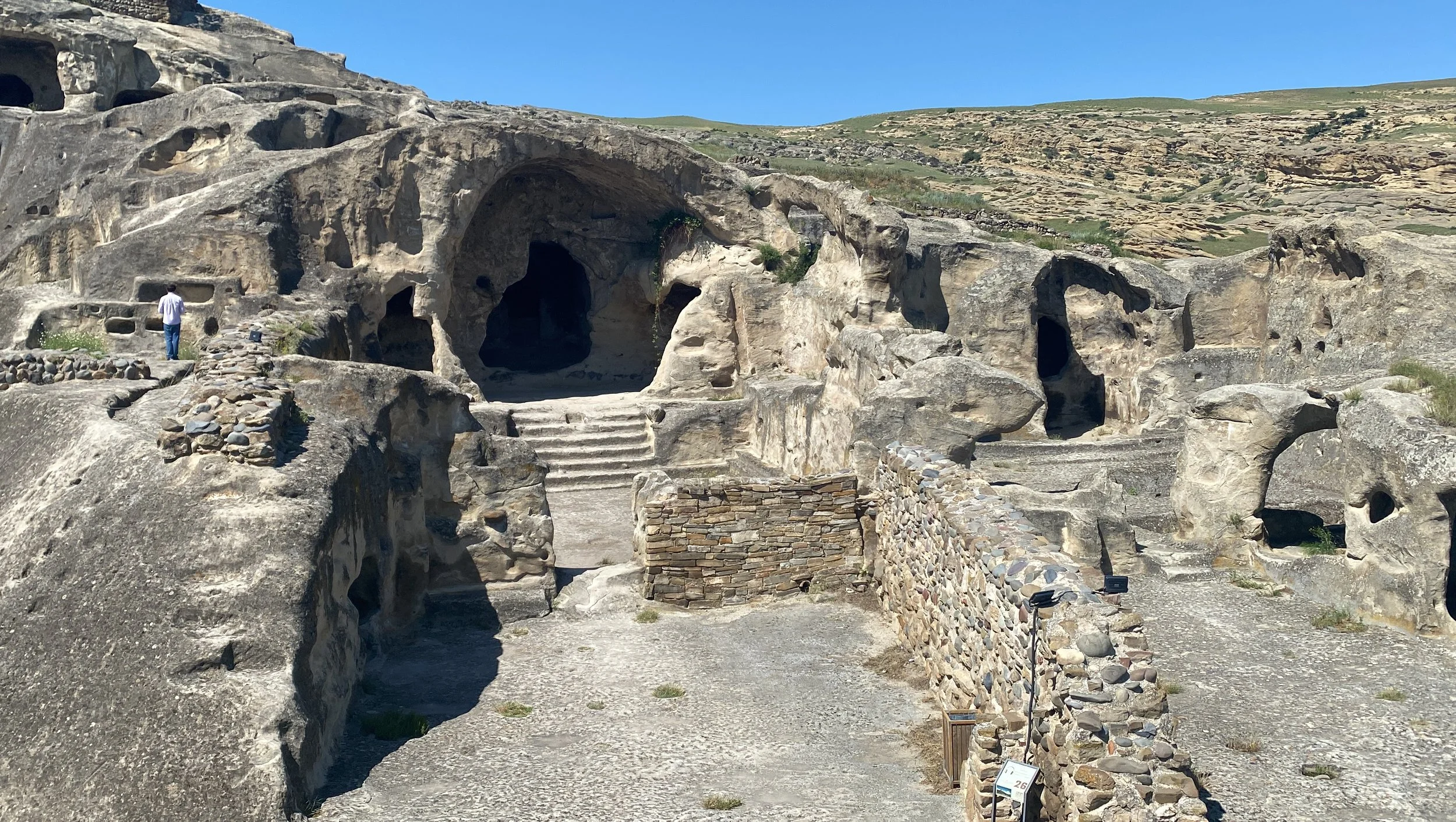
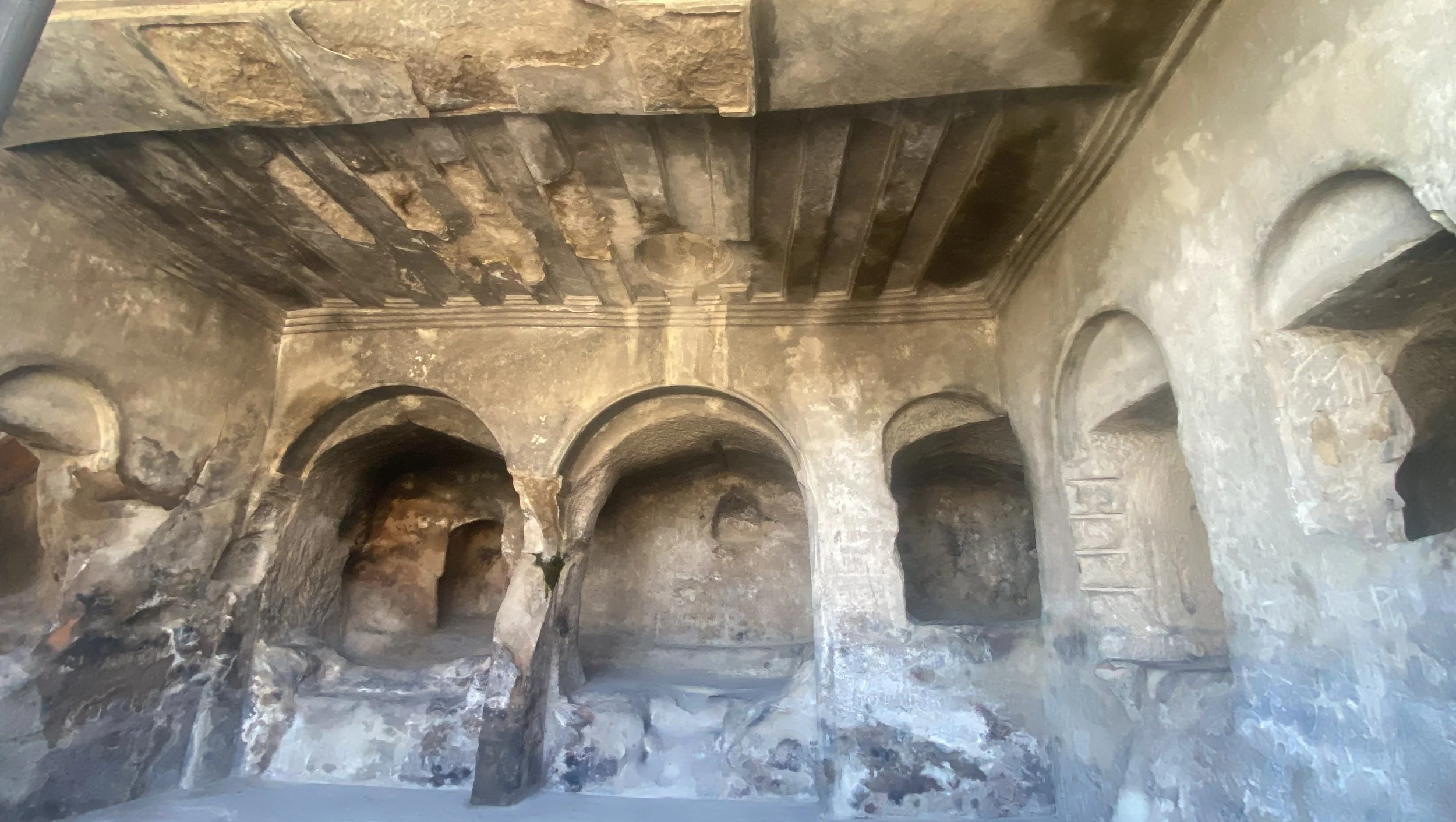
I still don’t know how to pronounce Uplistsikhe, but that never stopped me from enjoying the fascinating ancient cave city located southeast of Gori. Dating back to the early Iron Age, this cave city also served as a fortress with many tunnels, chambers, and temples.
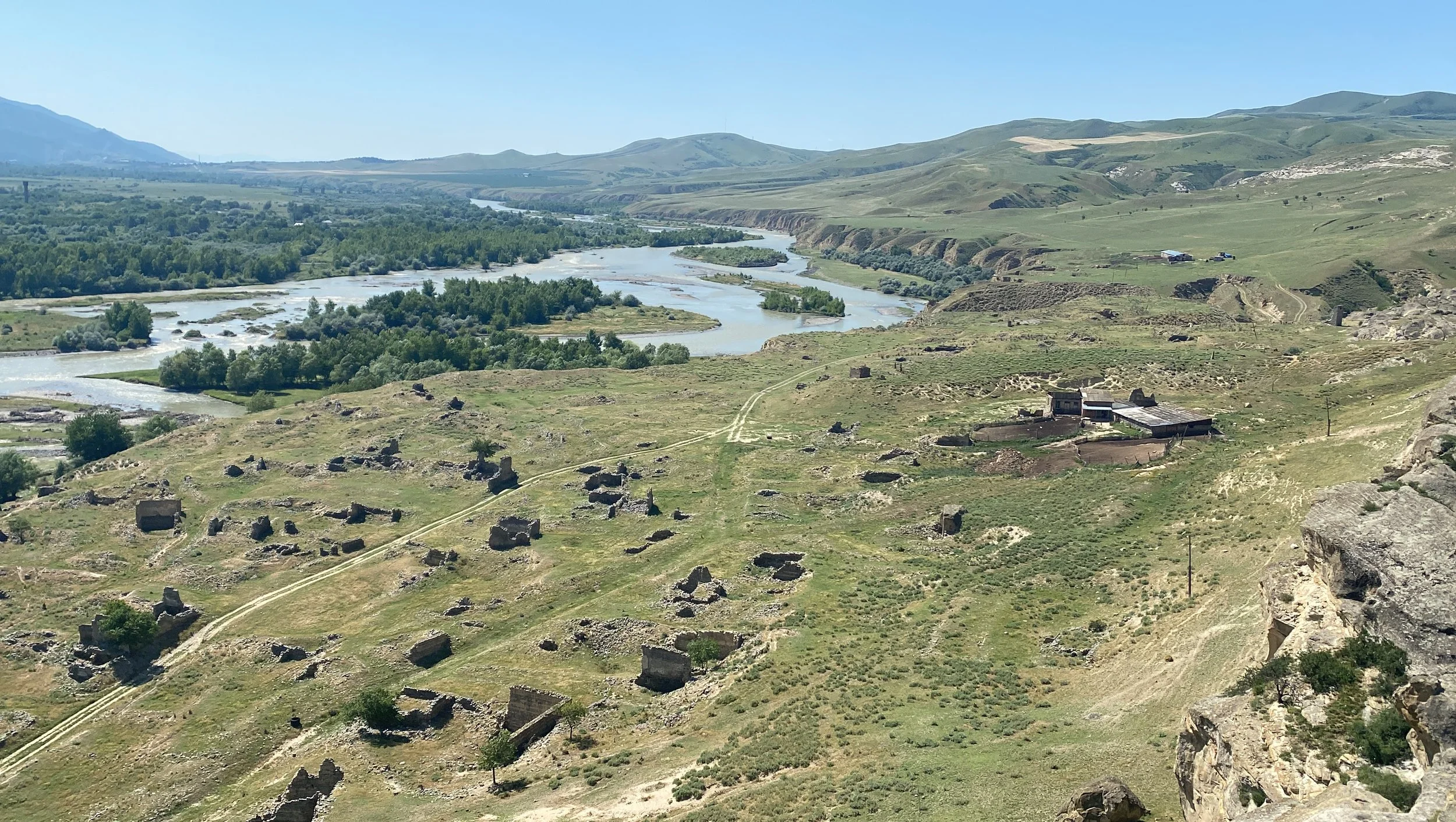
Uplistsikhe is an ancient cave city carved into the rock in central Georgia, dating back to the early Iron Age. It features a complex of tunnels, chambers, and a church at the top. They even had rooms for storing wine. If you don’t have a car, you will instead need to take a taxi or try your luck with a minibus., but it’s worth the effort going out there. Expect to spend two hours or more.
Kutaisi
An old Soviet industrial city, Kutaisi is worth the visit not so much because of what it has to offer– which isn’t much – but because of what’s around the city. There may not be much there for tourists now, but almost a thousand years ago, it was the capital city of the Kingdom of Georgia
Sanatorium Medea
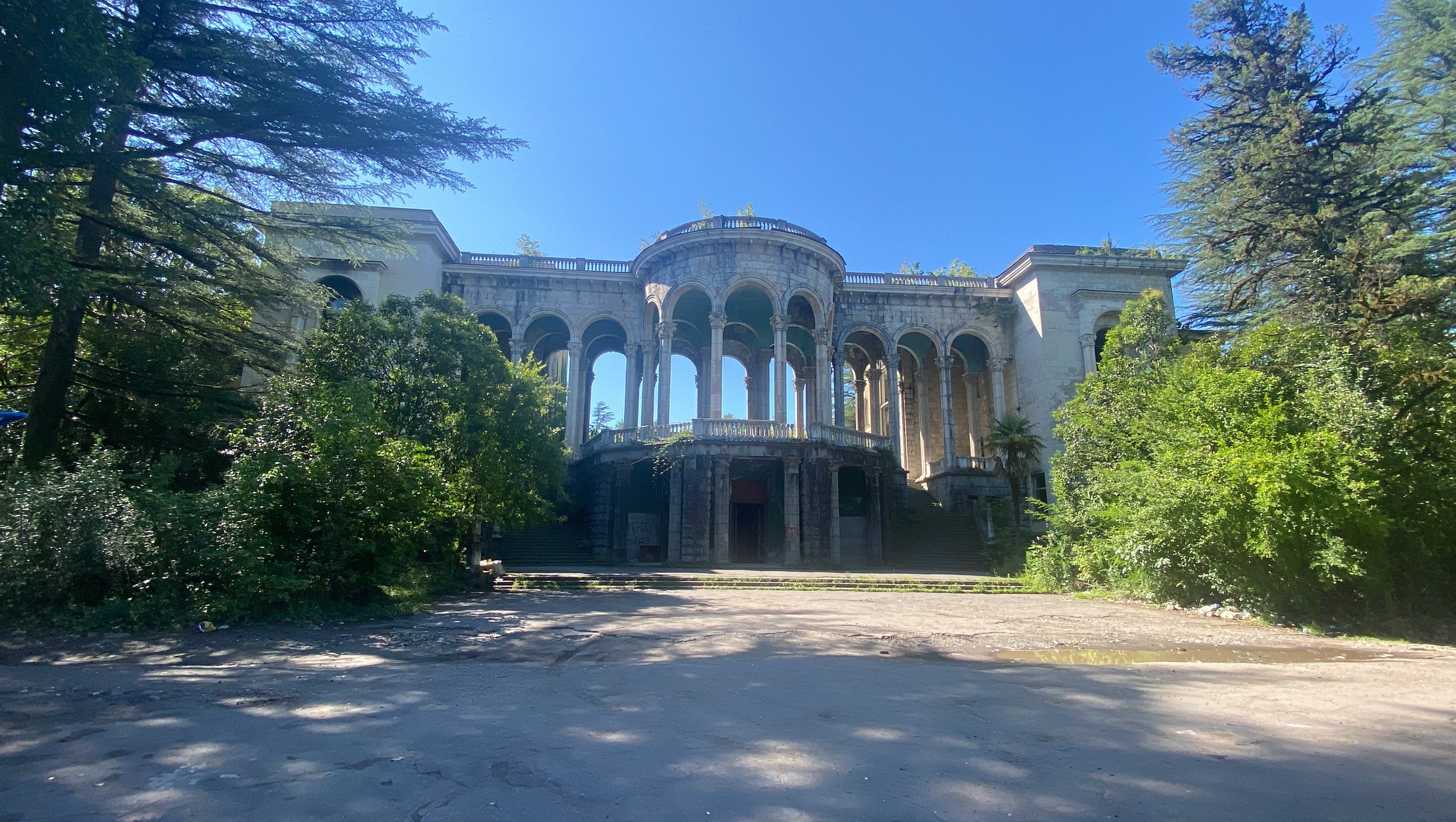
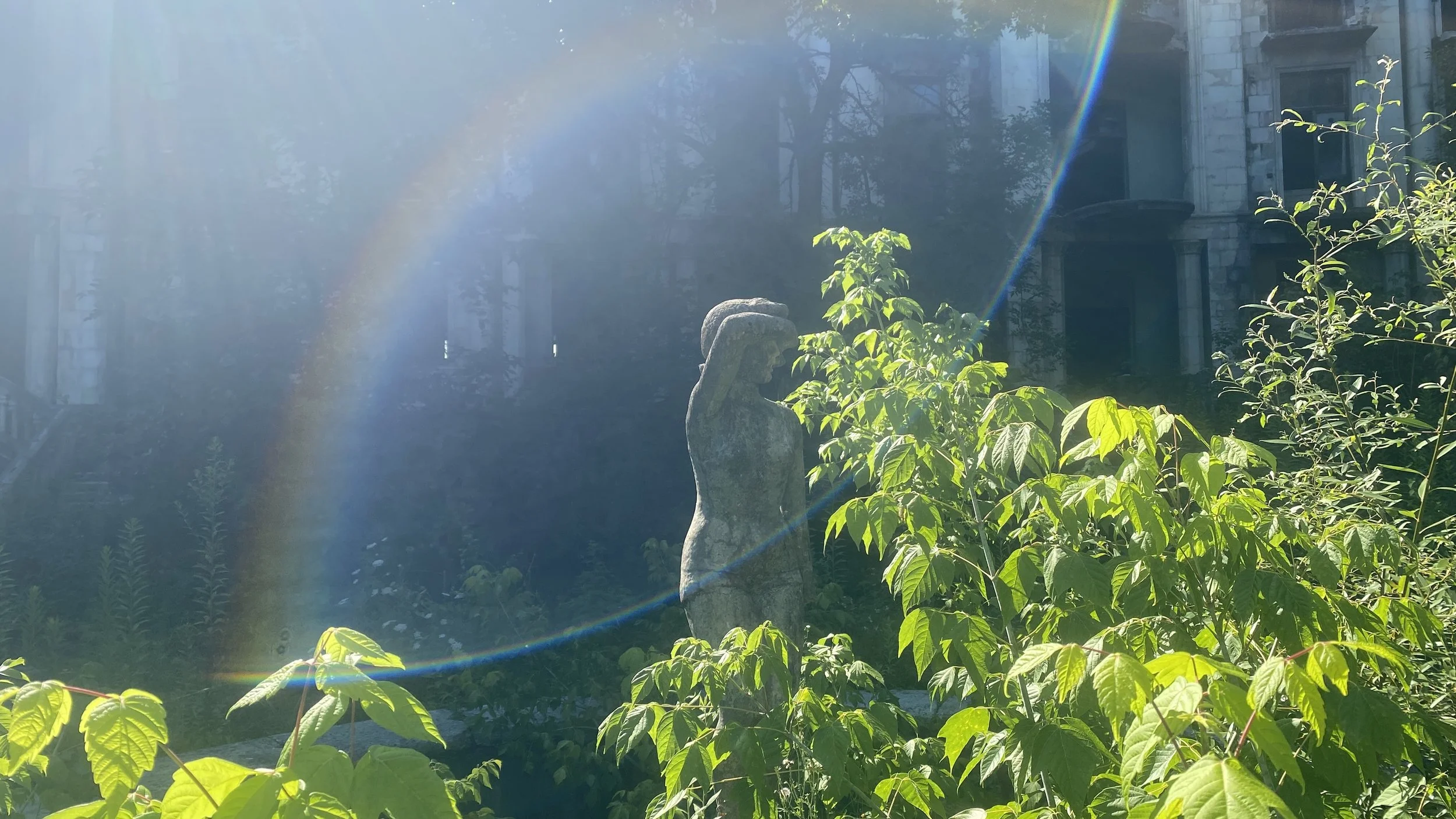
My favorite place to visit was the abandoned Sanatorium Medea, one of the Soviet Union’s most popular health and wellness destinations, which ceased operation after the country’s collapse in 1991. I was told that people would come from as far away as the Baltics to visit the spa in the nearby town of Tskaltubo, and that trains would arrive there four times a day. Vacation time was strongly encouraged in the Soviet Union, and in many cases, trips were paid for or subsidized by workers’ unions.
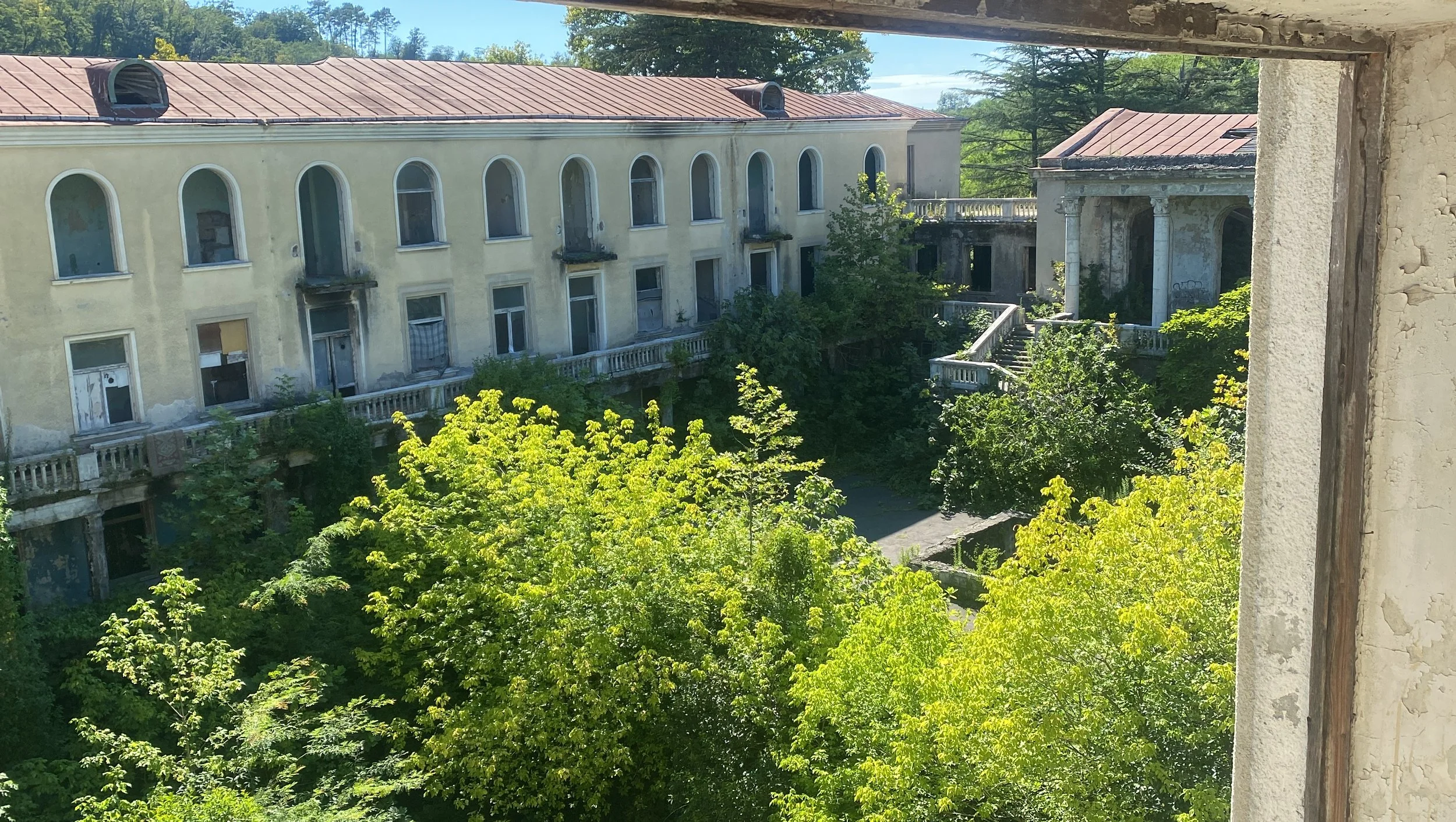
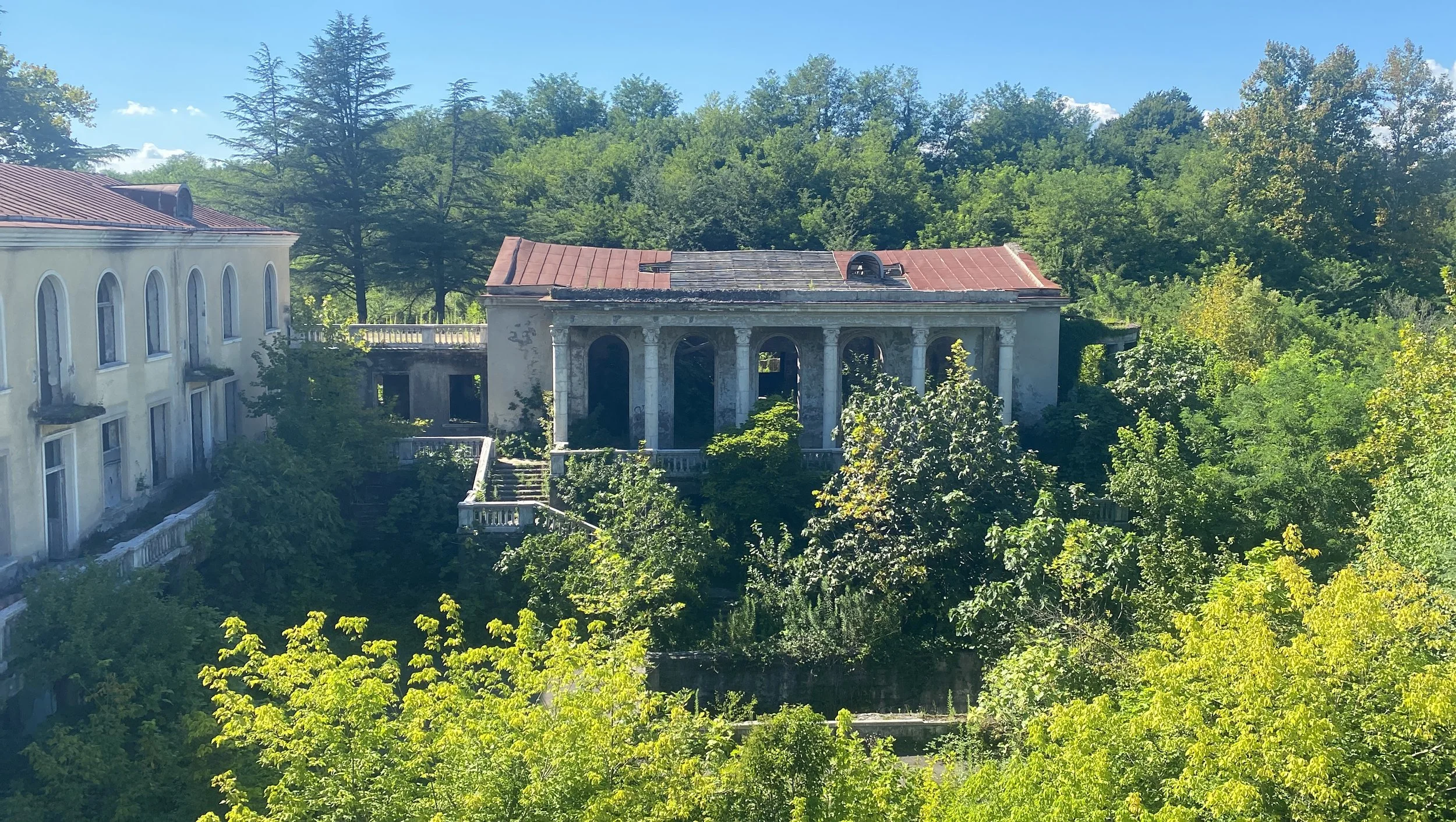
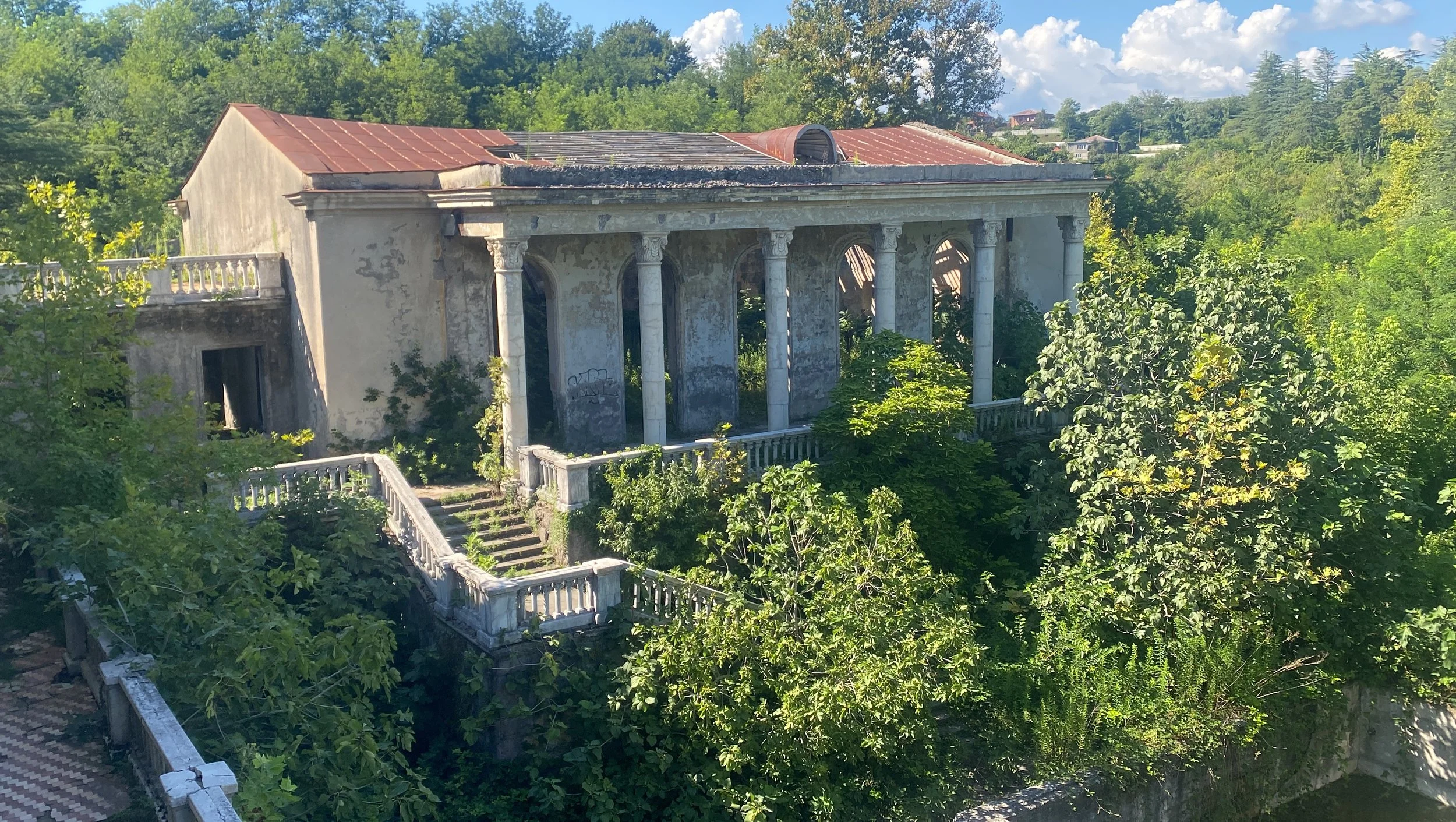
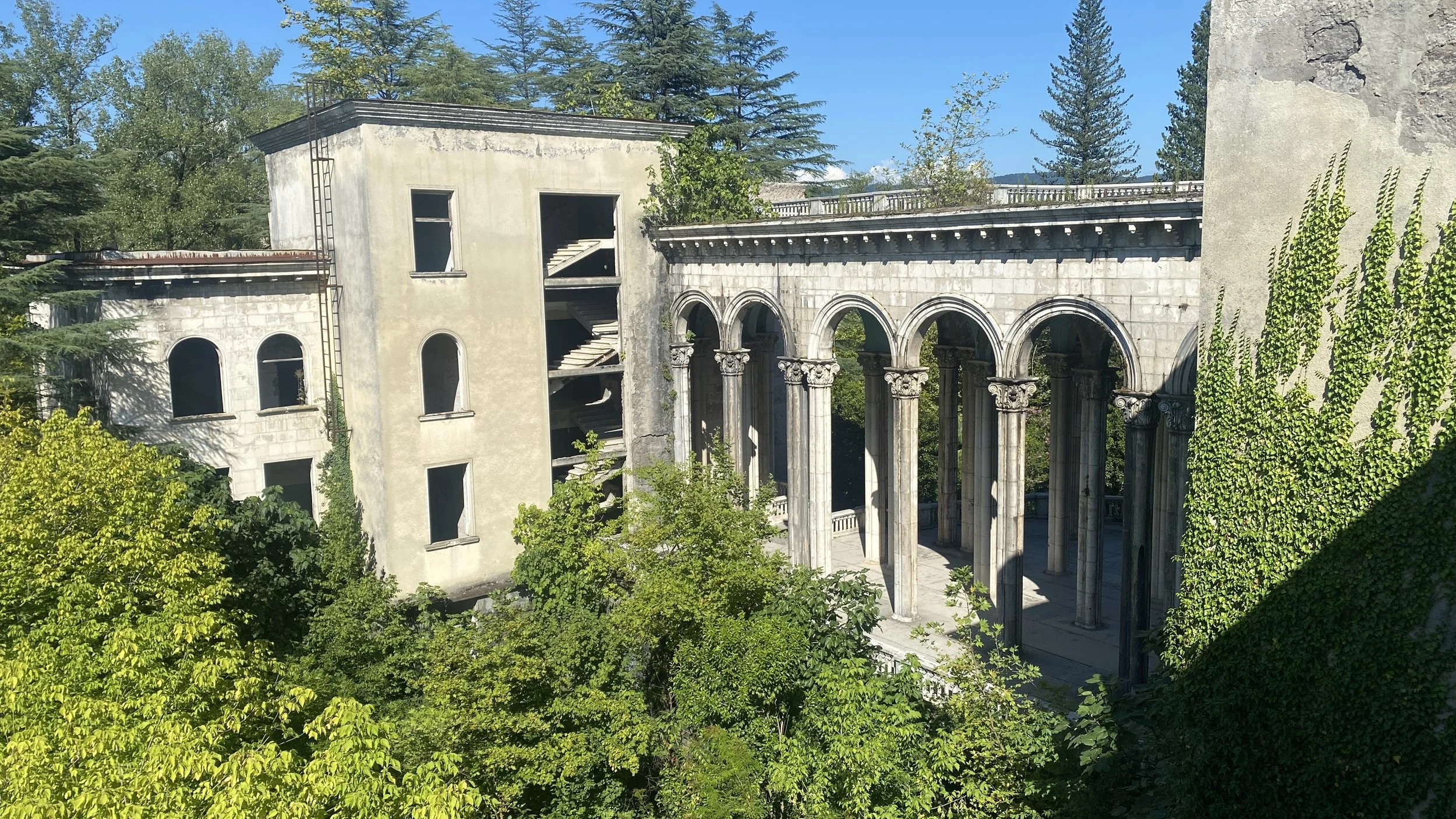
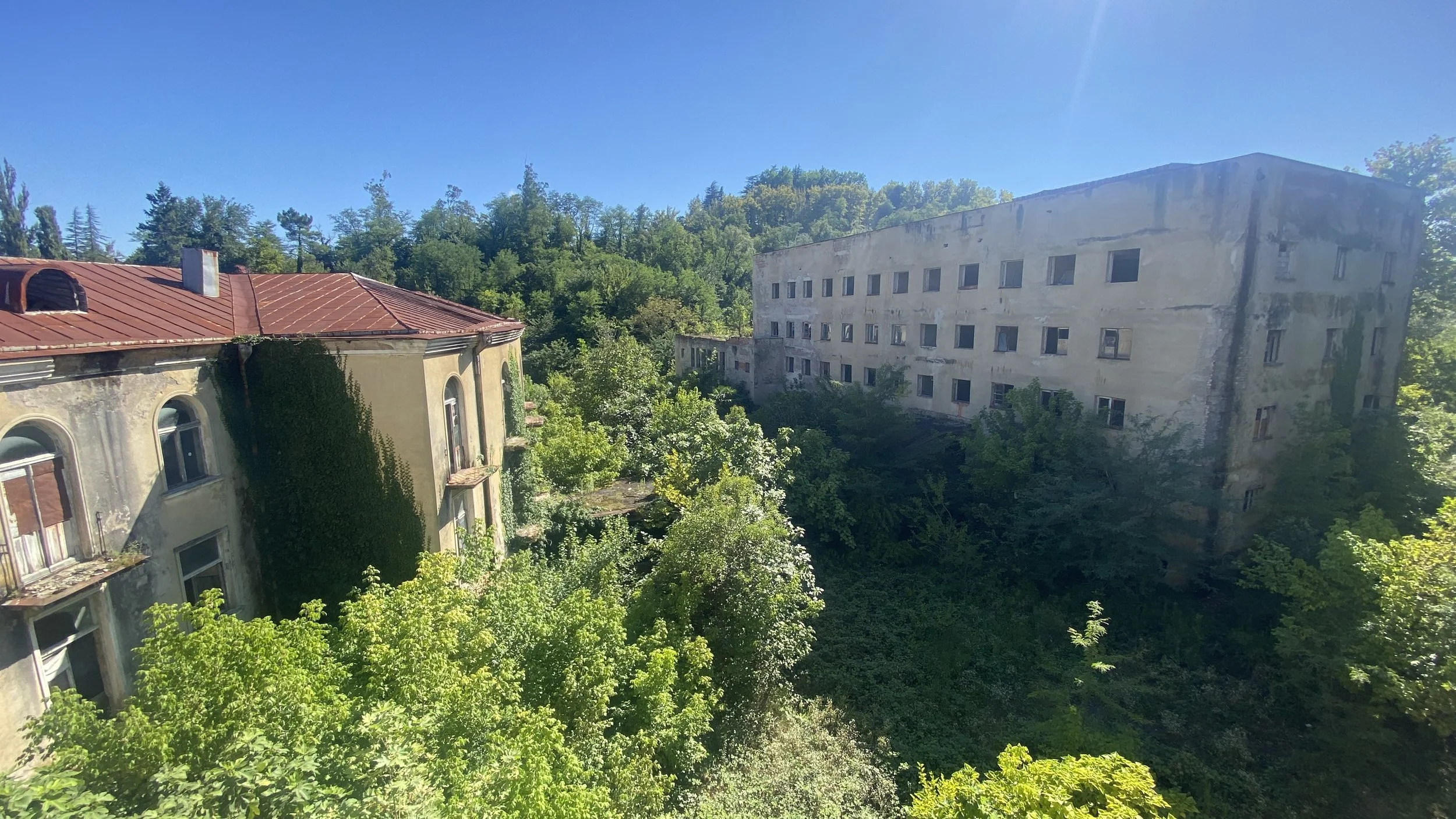
Now, nature has overtaken it once again as it has been decaying for over three decades. There is not much else inside except rotted lumber and broken porcelain. The area is huge and has two bigger buildings and several smaller ones behind it. Easily accessible by minibus, it’s definitely worth exploring if you’re in Kutaisi.
Caves
There are many caves around Georgia, including the two deepest in the world in Abkhazia, and several of them are around Kutaisi. Prometheus Cave, where the famed ancient Greek hero is rumored to have been imprisoned, and Sataplia Cave are the two most popular in the area.
Stepantsminda
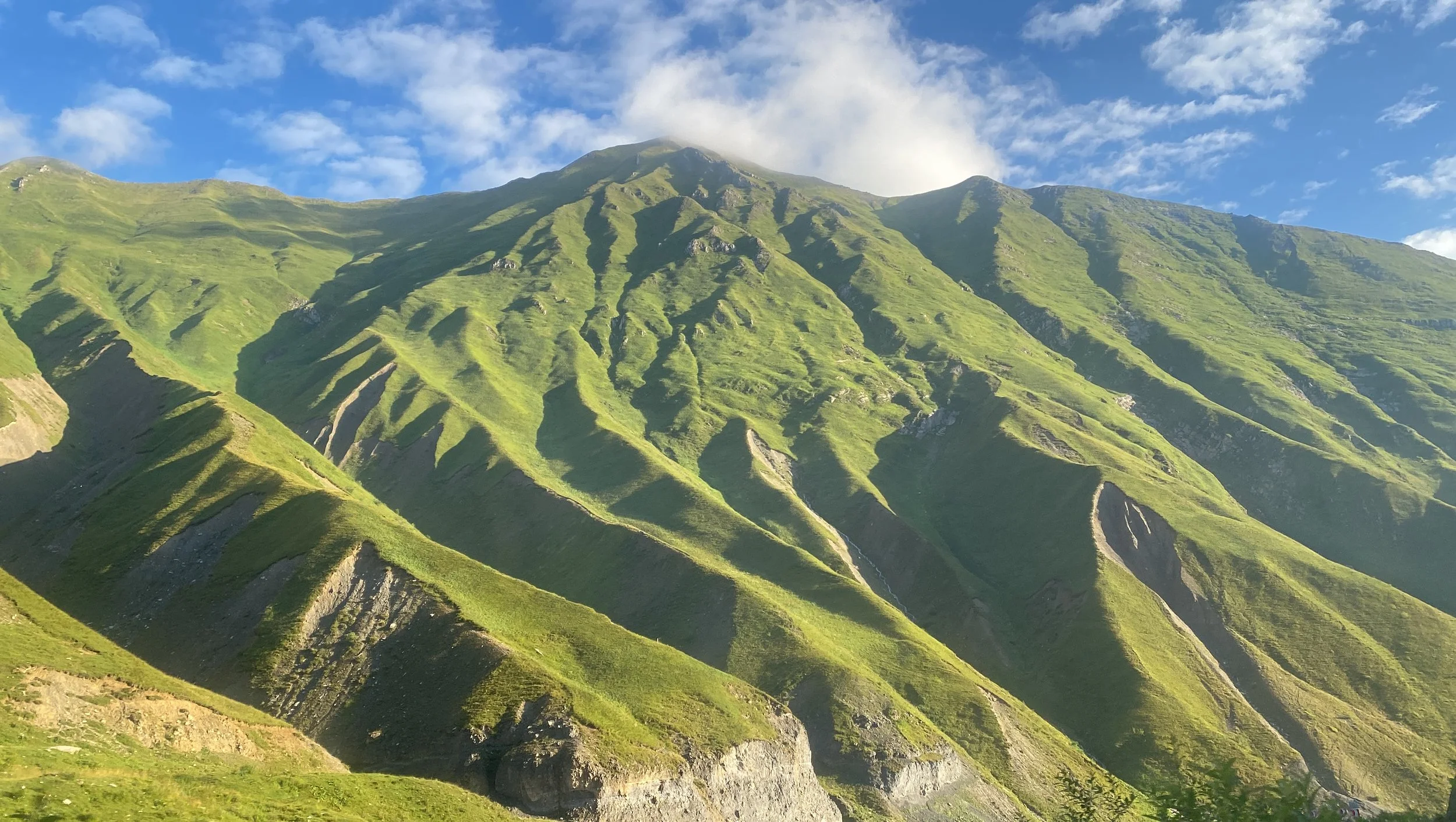
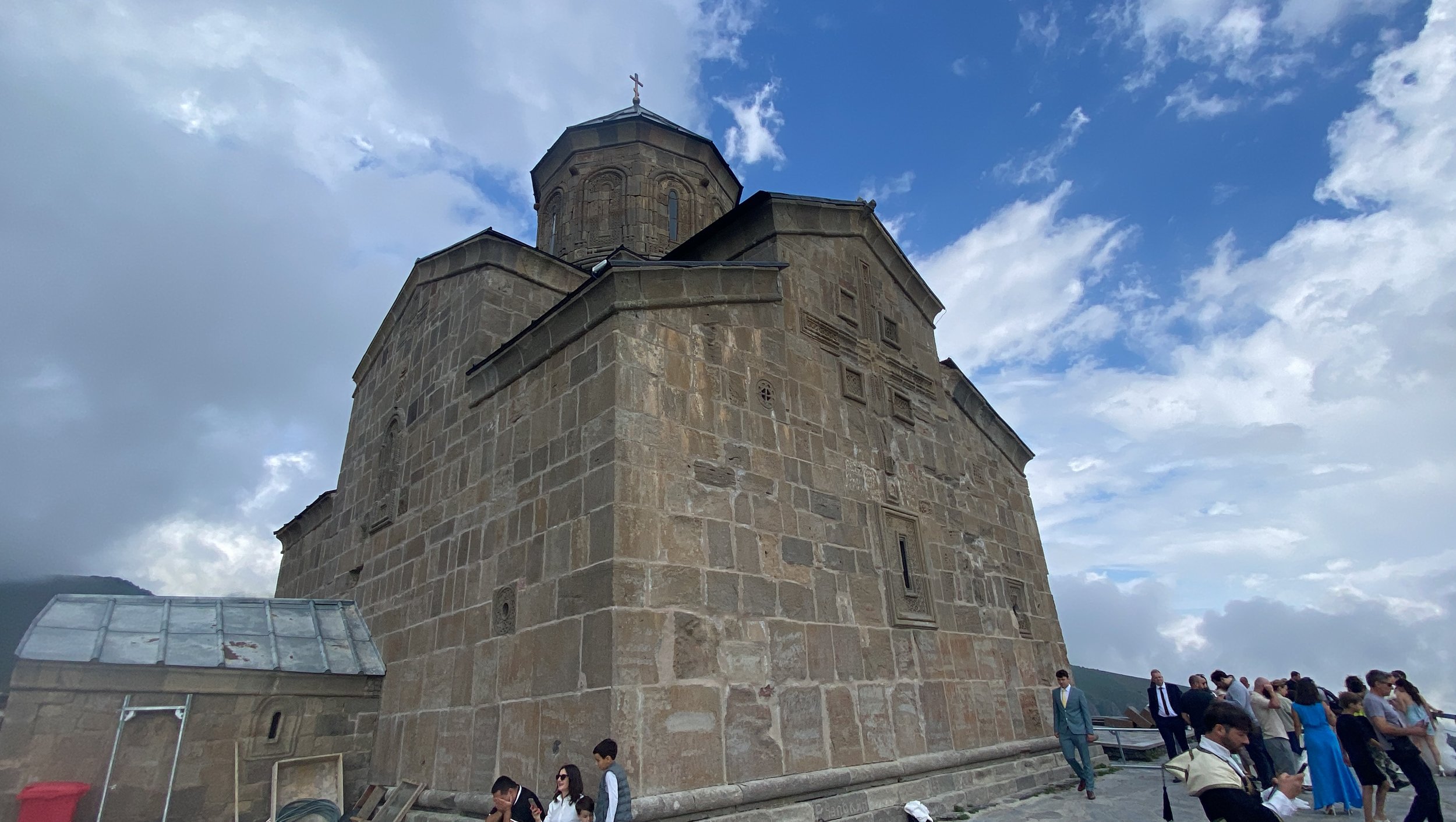
Further along the ridge of the Caucasus Mountains is Stepantsminda, also referred to as Kazbegi. Aside from the many hiking trails, there are several places of interest around the area and along the way, such as the ancient Gergeti Trinity Church, which sits on a hill outside the town surrounded by stunning mountains.
The Russia-Georgia Friendship monument is on the way, although many Georgians tend to dispute its meaning. There is also Arshi Castle, whose oldest ruins date back to the 10th century.
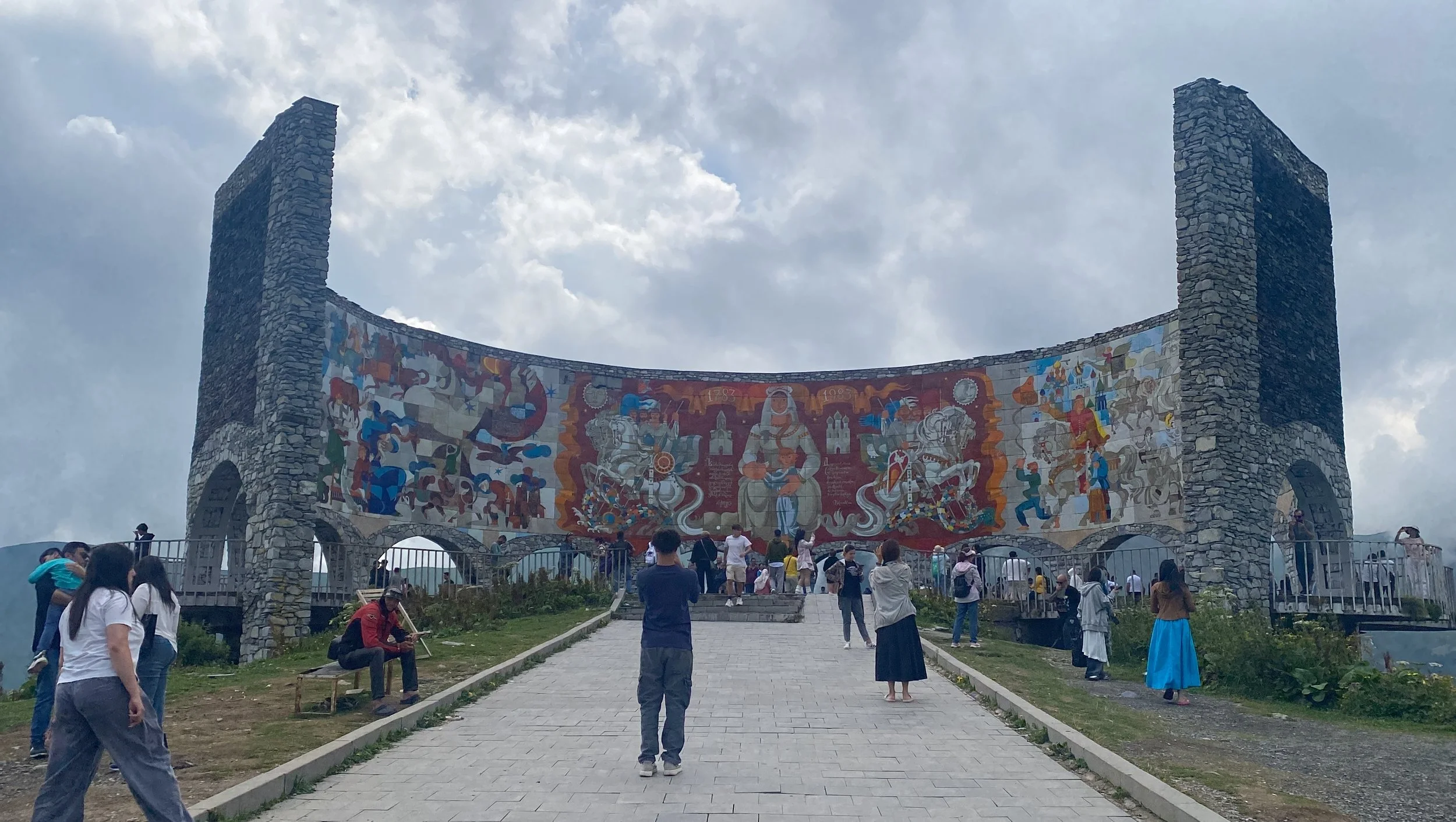
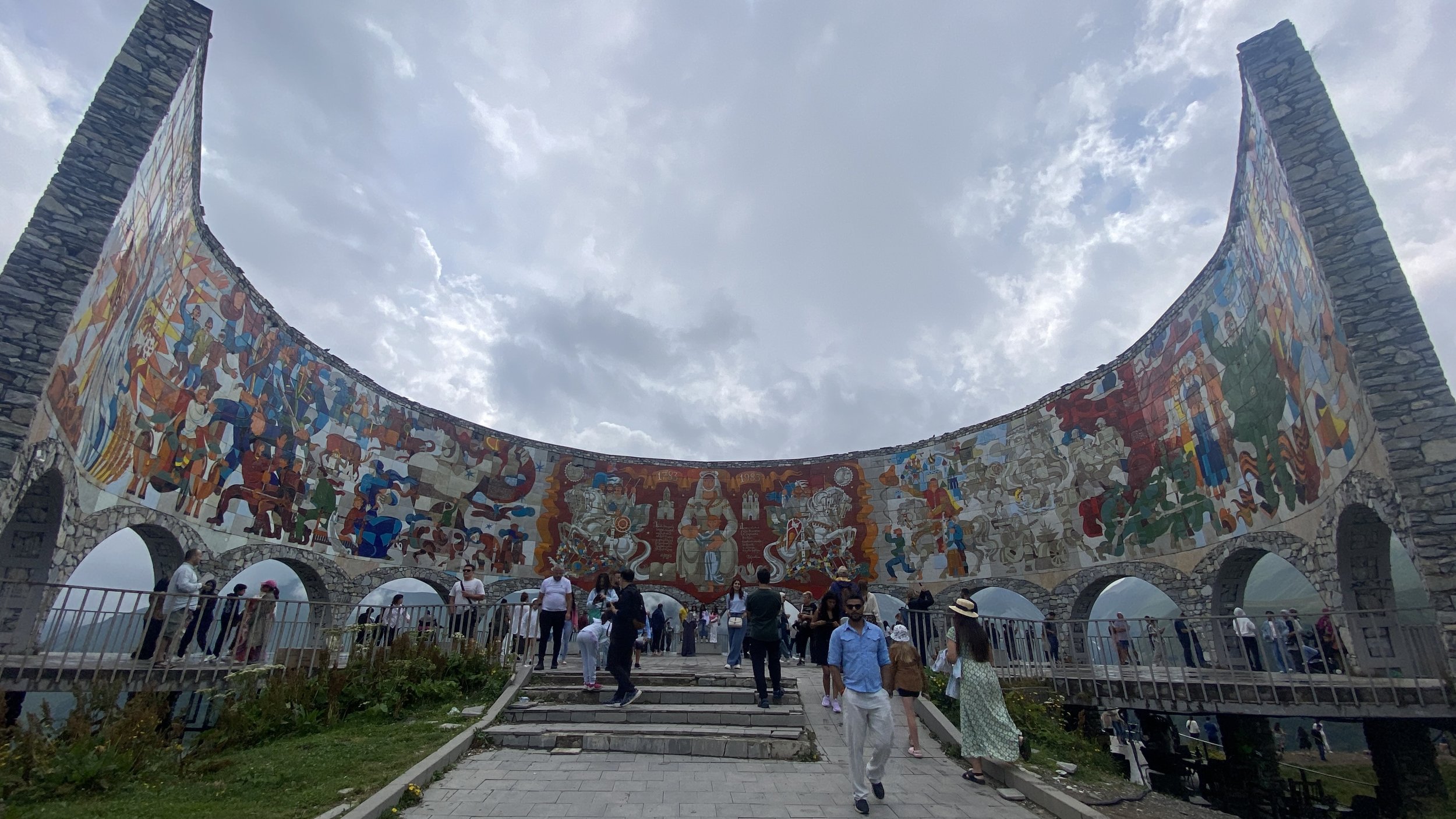
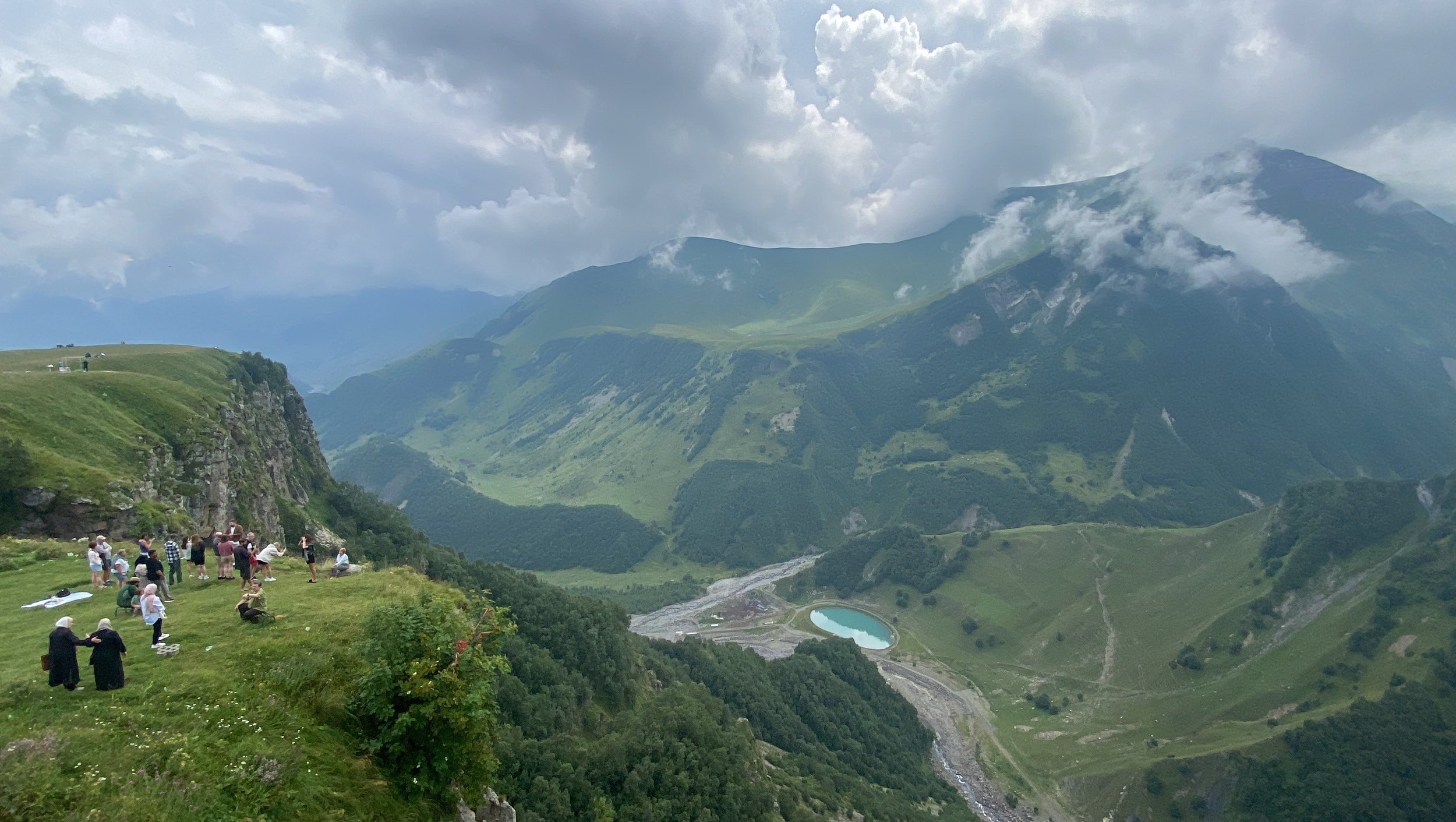
There is obviously so much more than what’s mentioned above. Georgia’s food and wine culture is unlike anything you will taste anywhere else, and its gorgeous, picturesque landscape is one that you will never fully explore. Here is a list of more sites and destinations:
Petra Fortress
Mtirala park
Machakhela park
Mirveti waterfall
Makhuntseti waterfall
Bridge of Queen Tamar
Martvili canyon
Okatse canyon
Dendrological park
Gomi mountain
Beshumi green lake
Gelati Monastery
Rabat fortress
Vardzia
Nnaixel